Category: Coffee Gear

Japanese pour-over drippers and hand grinders compared using official specs.

  • Hario V60 Drip Kettle AIR vs Zebrang 350 mL: Any Difference?

    Hario V60 Drip Kettle AIR vs Zebrang 350 mL: Any Difference?

    As an Amazon Associate, TidyJapan earns from qualifying purchases. Links marked ‘Check price’ are affiliate links.

    Short answer: On paper, these are the same kettle. Hario lists identical dimensions (177 x 78 x 128 mm), 350 mL capacity, PCT resin, made in Japan and $22.50 each. Pick by branding and color. The V60 AIR is translucent black, and the Zebrang is Hario’s black outdoor-line version. Only the AIR page lists dishwasher-safe use.

    How we compare: every spec in this article comes from official manufacturer specifications and product pages (starting with Hario USA’s V60 Drip Kettle AIR page and Zebrang Outdoor Drip Kettle page), all listed under Sources below. We don’t run hands-on tests, and if a spec isn’t published, we say so. Last updated: October 2026.

    I live in Japan, where a light plastic pour-over kettle is a common first purchase for home coffee. Hario sells two that look almost identical, so here is what the official pages say.

    I haven’t tested these side by side. Everything below comes from the manufacturers’ official product pages, linked at the end. If a spec isn’t published, I say so instead of guessing.

    Quick Comparison Table

    Spec Hario V60 Drip Kettle AIR Hario Zebrang Outdoor Drip Kettle 350 mL
    Product number VKA-35-TB ZB-MDP-35B
    Capacity 350 mL practical 350 mL practical
    Size (W x D x H) 177 x 78 x 128 mm 177 x 78 x 128 mm
    Material PCT resin PCT resin
    Color Translucent black Black
    Heatproof temperature 212°F Not stated on US page
    Dishwasher (Hario USA) Hot water and dishwasher safe Not stated
    Stovetop / microwave Not for open fire, oven or microwave Not stated on US page
    Hario USA price $22.50 $22.50
    Made in Japan Japan

    Sizes, capacities and materials are from Hario USA product pages. Hario USA doesn’t publish product weights on these pages, so we don’t list them.

    Key differences at a glance

    • Specs: Hario lists the same 350 mL capacity, 177 x 78 x 128 mm size and PCT resin body for both kettles.
    • Branding: The AIR belongs to Hario’s V60 line, while the Zebrang belongs to Hario’s outdoor line.
    • Care information: Only the AIR page states dishwasher safety and the 212°F heatproof limit.
    • Price: Both cost $22.50 at Hario USA.
    • What stays the same: Neither one goes on a stove. You pour boiled water into it and then pour over the coffee.

    The 3 Differences That Matter

    1. Line and look

    The difference is the name and the color. The V60 AIR is translucent black, and the Zebrang is black and sold as outdoor gear.

    2. Care details on the US pages

    Hario USA’s AIR page says it is hot water and dishwasher safe and not for open fire, oven or microwave. The Zebrang page doesn’t repeat those notes, so follow the manual that comes in the box.

    3. How you use them

    Neither heats water. Hario Japan explains that transferring boiled water into the Zebrang lowers it toward the 93 °C it recommends for brewing.

    What’s the same

    Same size, same 350 mL capacity, same lightweight PCT resin, same price and both made in Japan. Both are small enough for a drawer or camping bag.

    Who Should Buy Which?

    Choose the V60 Drip Kettle AIR if you:

    • Want the translucent look to see the water level
    • Want the dishwasher note in writing
    • Use other V60 gear

    Choose the Zebrang 350 mL if you:

    • Prefer solid black
    • Collect Hario’s outdoor gear
    • Camp with your coffee kit

    The View from Japan

    Hario Japan lists both at ¥1,980: the V60ドリップケトル・エアー (VKA-35-TB) and the 計量ドリップポット Zebrang (ZB-MDP-35B), with the same dimensions and material. Hario says the AIR has measurement marks, so you can gauge water without a scale.

    Reviewers on Hario’s Japanese online store say the AIR makes it easy to control the pour, needs no preheating, and suits beginners. One warns that the rim is lower on the handle side, so hot water can reach your hand if you tip it too far. A Japanese coffee blog found the stream less precise than a gooseneck electric kettle but fine for beginners and outdoor use. (Third-party reviews, not our own testing.)

    Pair it with a dripper: Hario V60 01 vs 02 Plastic Dripper.

    Hario V60 Drip Kettle AIR vs Zebrang 350 mL: Frequently Asked Questions

    Can the Hario V60 Drip Kettle AIR go on the stove?

    No. Hario USA says it is not for open fire, oven or microwave. Pour boiled water into it.

    Is the Drip Kettle AIR dishwasher safe?

    Hario USA says it is hot water and dishwasher safe.

    How much water does it hold?

    350 mL practical capacity, for both the AIR and the Zebrang.

    Are the AIR and Zebrang the same kettle?

    Hario lists identical size, capacity, material and price. They differ in color and product line.

    Check current listings

    Prices and colors change often, so check the current listing before buying.

    Sources

    Specs checked October 2026. Prices and availability change, so check the current listing before buying.
  • Hario Mizudashi vs Cold Brew Coffee Wine Bottle: Which?

    Hario Mizudashi vs Cold Brew Coffee Wine Bottle: Which?

    As an Amazon Associate, TidyJapan earns from qualifying purchases. Links marked ‘Check price’ are affiliate links.

    Short answer: The Mizudashi MCPN-14 pot is the practical pick. It makes more (1000 mL vs 650 mL), costs less ($25.50 vs $34.50 at Hario USA) and has a handle. Choose the Cold Brew Coffee Wine Bottle FIC-70 if you want a slim, handle-free bottle that fits a fridge door and looks good on the table.

    How we compare: every spec in this article comes from official manufacturer specifications and product pages (starting with Hario USA’s Mizudashi page and Cold Brew Coffee Wine Bottle page), all listed under Sources below. We don’t run hands-on tests, and if a spec isn’t published, we say so. Last updated: October 2026.

    I live in Japan, where both of these Hario cold brewers sit side by side in kitchen shops every summer. They brew the same way but are shaped for different fridges and tables.

    I haven’t tested these side by side. Everything below comes from the manufacturers’ official product pages, linked at the end. If a spec isn’t published, I say so instead of guessing.

    Quick Comparison Table

    Spec Hario Mizudashi MCPN-14 Hario Cold Brew Coffee Wine Bottle FIC-70
    Brewed volume 1000 mL 650 mL
    Size (W x D x H) 138 x 94 x 294 mm 87 x 84 x 300 mm
    Shape Pot with handle Wine-bottle shape, no handle
    Glass Heatproof borosilicate Heatproof borosilicate
    Filter Polyester mesh strainer (PP frame) Polyester mesh filter (PP frame)
    Spout and stopper PP lid Removable silicone spout and stopper
    Brew time (Hario USA) Not stated on US page About 8 hours in the fridge
    Hario USA price $25.50 $34.50
    Made in Japan Japan

    Sizes, capacities and materials are from Hario USA product pages. Hario USA doesn’t publish product weights on these pages, so we don’t list them.

    Key differences at a glance

    • Capacity: The Mizudashi pot brews 1000 mL, while the wine bottle brews 650 mL.
    • Shape: The wine bottle is a slim 87 mm wide with no handle, while the Mizudashi pot is 138 mm wide with a handle.
    • Price: Hario USA lists the Mizudashi MCPN-14 at $25.50 and the FIC-70 bottle at $34.50.
    • Closure: The bottle seals with a silicone spout and stopper, while the pot has a polypropylene lid.
    • What stays the same: Both are Japanese-made heatproof glass cold brewers with a fine polyester mesh filter, brewed in the fridge.

    The 4 Differences That Matter

    1. Volume

    1000 mL versus 650 mL. If you drink cold brew every day, the pot means fewer batches.

    2. Where it fits

    The bottle is narrow enough for many fridge door pockets, though at 300 mm it is a little taller than the pot. The pot is wider and needs shelf space.

    3. Pouring and serving

    The pot has a handle. The bottle pours through a silicone spout, and Hario sells it as a bottle you can put on the table.

    4. Cleaning

    Hario Japan’s store says customers who prioritize easy washing and capacity usually choose the Mizudashi pot, while those who prioritize design and storage choose the bottle.

    What’s the same

    Same idea: coffee grounds in a fine mesh filter, cold water, about 8 hours in the fridge. Both are made in Japan from Hario’s heatproof glass.

    Who Should Buy Which?

    Choose the Mizudashi MCPN-14 if you:

    • Want the most cold brew per batch
    • Want a handle
    • Want the lower price

    Choose the Cold Brew Coffee Wine Bottle if you:

    • Need it to fit a fridge door
    • Want a bottle to serve at the table
    • Brew smaller batches

    The View from Japan

    In Japan the bottle is the フィルターインコーヒーボトル FIC-70 (650 mL, 5 cups, ¥2,750, 71 mm mouth), and the pot is the 水出し珈琲ポット MCPN-14 (1,000 mL, 8 cups, ¥2,200). Answering a customer question, Hario’s Japanese store wrote that people who value design and storage tend to choose the bottle, while those who value easy washing and capacity tend to choose the pot.

    Rakuten reviewers of the MCPN-14 praise how easily it makes smooth iced coffee and say it fits the fridge like a 2-liter bottle. A Japanese blogger who used Hario’s tea version of the wine bottle for two years liked its size and seal, but found the silicone spout grooves hard to clean. (Third-party reviews, not our own testing.)

    Choosing a pot size? See Hario Mizudashi MCPN-7 vs MCPN-14.

    Hario Mizudashi vs Cold Brew Coffee Wine Bottle: Frequently Asked Questions

    How long does the Hario Cold Brew Coffee Wine Bottle take?

    Hario USA says about 8 hours in the fridge, with longer steeping for stronger coffee.

    Which makes more cold brew?

    The Mizudashi MCPN-14, at 1000 mL versus 650 mL.

    Does the wine bottle fit in a fridge door?

    It is 87 mm wide and 300 mm tall. Check your door pocket height before buying.

    Are both made in Japan?

    Yes, according to Hario USA.

    Check current listings

    Prices and colors change often, so check the current listing before buying.

    Sources

    Specs checked October 2026. Prices and availability change, so check the current listing before buying.
  • Hario Mizudashi MCPN-7 vs MCPN-14: 600 or 1000 mL Cold Brew?

    Hario Mizudashi MCPN-7 vs MCPN-14: 600 or 1000 mL Cold Brew?

    As an Amazon Associate, TidyJapan earns from qualifying purchases. Links marked ‘Check price’ are affiliate links.

    Short answer: Get the 1000 mL MCPN-14 if you drink cold brew daily or share it. It costs just $3 more at Hario USA ($25.50 vs $22.50) and comes in more colors. Get the 600 mL MCPN-7 if you live alone or have a short fridge shelf. It is 86 mm shorter.

    How we compare: every spec in this article comes from official manufacturer specifications and product pages (starting with Hario USA’s official product page), all listed under Sources below. We don’t run hands-on tests, and if a spec isn’t published, we say so. Last updated: October 2026.

    I live in Japan, where summer iced coffee is often made overnight in the fridge (mizudashi means “water brewed”). Hario’s Mizudashi pot is the classic way to do it, and it comes in two sizes.

    I haven’t tested these side by side. Everything below comes from the manufacturers’ official product pages, linked at the end. If a spec isn’t published, I say so instead of guessing.

    Quick Comparison Table

    Spec Hario MCPN-7 (600 mL) Hario MCPN-14 (1000 mL)
    Brewed volume 600 mL 1000 mL
    Size (W x D x H) 138 x 94 x 208 mm 138 x 94 x 294 mm
    Pot Heatproof borosilicate glass Heatproof borosilicate glass
    Strainer Fine polyester mesh, removable Fine polyester mesh, removable
    Lid, frame, handle band Polypropylene Polypropylene
    Colors (Hario USA) Black Black, red, brown
    Hario USA price $22.50 $25.50
    Made in Japan Japan

    Sizes, capacities and materials are from Hario USA product pages. Hario USA doesn’t publish product weights on these pages, so we don’t list them.

    Key differences at a glance

    • Batch size: The MCPN-14 brews 1000 mL, while the MCPN-7 brews 600 mL.
    • Height: The MCPN-14 is 294 mm tall, which is 86 mm taller than the 208 mm MCPN-7.
    • Price: Hario USA lists the MCPN-7 at $22.50 and the MCPN-14 at $25.50.
    • Colors: Hario USA sells the 600 mL only in black, while the 1000 mL also comes in red and brown.
    • What stays the same: Both use the same glass pot design, fine-mesh removable strainer and 138 x 94 mm footprint.

    The 3 Differences That Matter

    1. How much you drink

    600 mL is about two to three tall glasses. 1000 mL covers a couple or a few days for one person, but one Japanese reviewer found it more than one person could finish in a day.

    2. Fridge fit

    Both have the same footprint. The deciding number is height: 208 mm versus 294 mm, so measure your door pocket or shelf.

    3. Cost per batch

    The pot price gap is small. The bigger running cost is coffee, because a full 1000 mL batch needs proportionally more grounds.

    What’s the same

    Same brewing method: put coarse or medium grounds in the mesh strainer, add water and leave it in the fridge. The strainer comes out for cleaning, and the pot is heatproof glass made in Japan.

    Who Should Buy Which?

    Choose the MCPN-7 if you:

    • Drink cold brew alone
    • Have a short fridge shelf
    • Want the cheapest Hario cold brewer

    Choose the MCPN-14 if you:

    • Drink it daily or share it
    • Want red or brown
    • Prefer fewer brewing sessions

    Mizudashi in Japan

    Hario Japan sells the same pots as the 水出し珈琲ポット (MCPN-14-B, 1,000 mL, 8 cups, ¥2,200) and the “Mini” MCPN-7-B (600 mL, 5 cups, ¥1,980). Its directions call for about 8 hours in the fridge, and Hario’s Japanese store says the pot can go in the dishwasher.

    Rakuten reviewers of the MCPN-14 call it an easy way to get smooth iced coffee that tastes good black. One says it fits in the fridge like a 2-liter bottle. Others note that it takes a lot of grounds, and one person drinking alone said the 1000 mL size was too much for a day. (Third-party reviews, not our own testing.)

    Prefer a slim bottle? See Hario Mizudashi vs Cold Brew Coffee Wine Bottle.

    Hario Mizudashi MCPN-7 vs MCPN-14: Frequently Asked Questions

    How long does Hario Mizudashi take to brew?

    Hario Japan’s directions call for about 8 hours in the fridge.

    How much coffee does the MCPN-14 make?

    1000 mL of brewed coffee. The MCPN-7 makes 600 mL.

    Is the Hario Mizudashi made in Japan?

    Yes. Hario USA lists both sizes as made in Japan.

    Can I make tea in it?

    Hario sells it as a coffee maker. Some Japanese reviewers say they also use it for barley or oolong tea.

    Check current listings

    Prices and colors change often, so check the current listing before buying.

    Sources

    Specs checked October 2026. Prices and availability change, so check the current listing before buying.
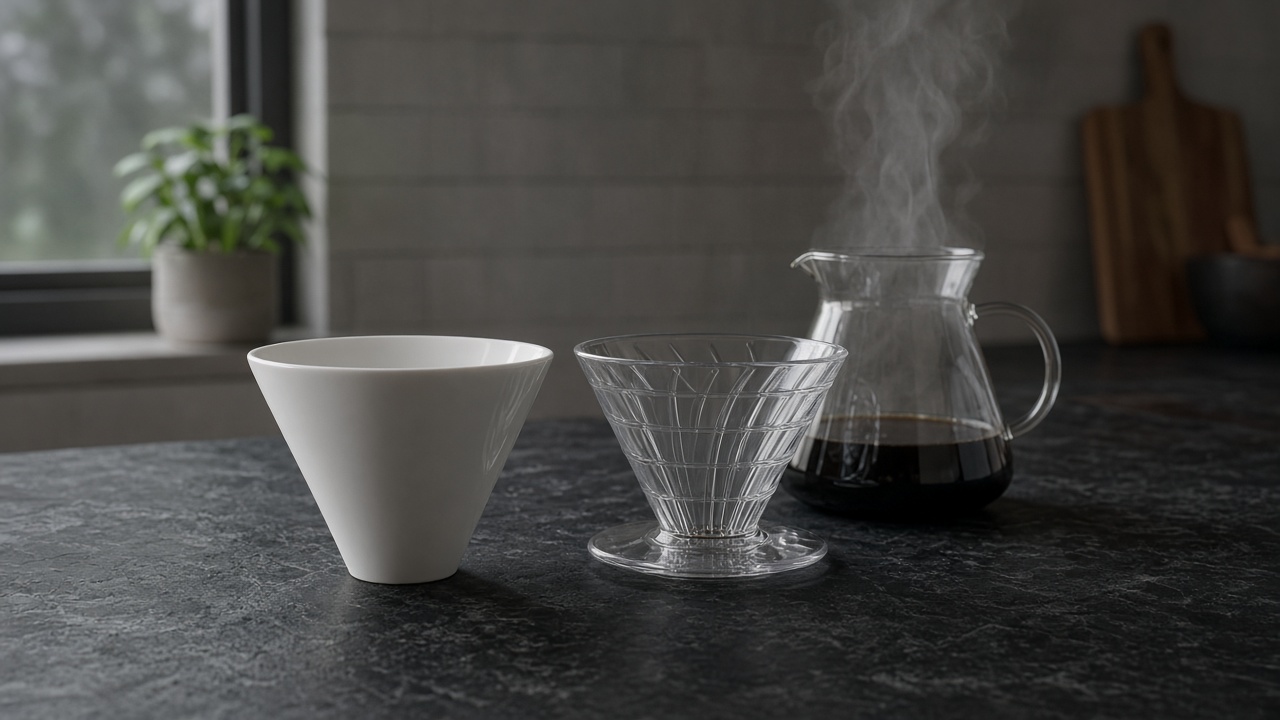
  • Hario Mini-Slim+ vs Skerton Pro: Which Hand Grinder?

    Hario Mini-Slim+ vs Skerton Pro: Which Hand Grinder?

    As an Amazon Associate, TidyJapan earns from qualifying purchases. Links marked ‘Check price’ are affiliate links.

    Short answer: For one or two cups and for travel, the Hario Mini-Slim+ (MSS-1DTB, $40 at Hario USA) is the cheaper, slimmer choice. It holds 24 g of grounds. For grinding several cups at once at home, the Skerton Pro (MMCS-2B, $58.50) holds 100 g of beans and has a glass catch jar.

    How we compare: every spec in this article comes from official manufacturer specifications and product pages (starting with Hario USA’s official Mini-Slim+ page and Skerton Pro page), all listed under Sources below. We don’t run hands-on tests, and if a spec isn’t published, we say so. Last updated: October 2026.

    I live in Japan, where a hand grinder is often the second piece of coffee gear people buy after a dripper. These are Hario’s two best-known ceramic burr models at the lower end of its range.

    I haven’t tested these side by side. Everything below comes from the manufacturers’ official product pages, linked at the end. If a spec isn’t published, I say so instead of guessing.

    Quick Comparison Table

    Spec Hario Mini-Slim+ (MSS-1DTB) Hario Skerton Pro (MMCS-2B)
    Capacity Coffee grounds 24 g Coffee grounds 100 g
    Size (W x D x H) 150 x 72 x 220 mm 167 x 95 x 195 mm
    Burrs Ceramic conical Ceramic conical
    Handle Stainless steel Aluminum
    Catch container Methacrylate resin bottle Heatproof borosilicate glass bowl
    Non-slip base Not listed Silicone non-slip cover
    Hario USA price $40.00 $58.50
    Made in China Glass bowl Japan; mill and handle China

    Sizes, capacities and materials are from Hario USA product pages. Hario doesn’t publish a product weight on these pages, so we don’t list one.

    Key differences at a glance

    • Capacity: The Skerton Pro holds 100 g, while the Mini-Slim+ holds 24 g of grounds, which is about two cups.
    • Shape: The Mini-Slim+ is a narrow 72 mm cylinder that packs easily, while the Skerton Pro is wider at 95 mm and built to sit on a counter.
    • Catch container: The Skerton Pro grinds into a borosilicate glass bowl, while the Mini-Slim+ uses a clear resin bottle.
    • Price: Hario USA lists the Mini-Slim+ at $40 and the Skerton Pro at $58.50.
    • What stays the same: Both use conical ceramic burrs, which Hario says transfer less heat and shave beans rather than crack them.

    The 4 Differences That Matter

    1. Batch size

    24 g is about one or two cups. If you grind for a full pot or for guests, the Skerton Pro’s 100 g means fewer refills.

    2. Portability

    The Mini-Slim+ is the travel grinder at 72 mm deep. Hario says the newer handle and shaft coupling give better traction than the original Mini-Slim.

    3. Stability on the counter

    The Skerton Pro has a silicone non-slip cover and a wider glass base, and Hario says its upgrades aim at easier adjustment and more consistent grinding.

    4. Materials

    Skerton Pro: aluminum handle and a Japanese-made glass bowl. Mini-Slim+: stainless handle and a resin bottle, all made in China.

    What’s the same

    Both are manual grinders with conical ceramic burrs and an adjustable grind setting, and both sell at Hario USA for under $60.

    Who Should Buy Which?

    Choose the Mini-Slim+ if you:

    • Grind one or two cups at a time
    • Want to travel or camp with it
    • Want the lower price

    Choose the Skerton Pro if you:

    • Grind for several cups
    • Want a glass catch bowl
    • Grind mostly at home

    The View from Japan

    In Japan, Hario sells the same-size slim mill as the “Ceramic Slim” MSS-1TB (150 x 72 x 220 mm, 24 g), at a suggested price of ¥3,300. The Skerton Pro (MMCS-2B) appears on Hario’s global site. Its domestic sibling is the original Skerton (MSCS-2B), which also holds 100 g.

    On the Japanese review site Monocil, reviewers of the Ceramic Slim call it a good first grinder, compact and quiet, with a clear bottle that shows how much is ground. One notes that it can’t reach espresso fineness. A Monocil reviewer of the original Skerton said the handle turns easily and liked that the mill can be washed. (Third-party reviews, not our own testing.)

    Pair it with a dripper: see Hario V60 01 vs 02 Plastic Dripper.

    Hario Mini-Slim+ vs Skerton Pro: Frequently Asked Questions

    How much coffee does the Hario Mini-Slim+ hold?

    Hario lists 24 g of coffee grounds.

    How much does the Skerton Pro hold?

    Hario lists 100 g.

    Do both have ceramic burrs?

    Yes, both use conical ceramic burrs.

    Which is better for travel?

    The Mini-Slim+. It is 72 mm deep versus 95 mm for the Skerton Pro, and it has no glass parts.

    Check current listings

    Prices and colors change often, so check the current listing before buying.

    Sources

    Specs checked October 2026. Prices and availability change, so check the current listing before buying.
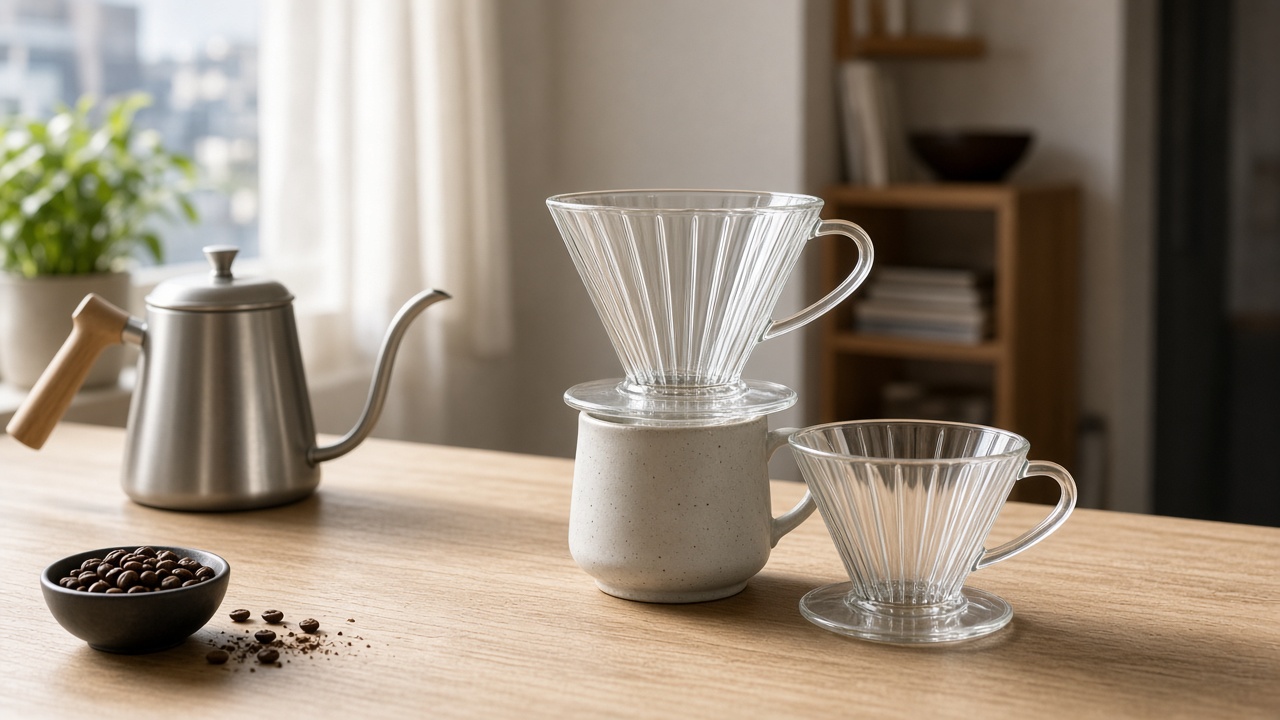
  • Hario V60 02 Plastic vs Ceramic: Is Porcelain Worth It?

    Hario V60 02 Plastic vs Ceramic: Is Porcelain Worth It?

    As an Amazon Associate, TidyJapan earns from qualifying purchases. Links marked ‘Check price’ are affiliate links.

    Short answer: For most people, buy the plastic V60 02. It is $13-14 at Hario USA, light and hard to break, and it has the same cone design and 1-4 cup rating. Buy the ceramic 02 ($30.50-32.50) if you want handmade Arita porcelain that sits on the counter. Expect to preheat it.

    How we compare: every spec in this article comes from official manufacturer specifications and product pages (starting with Hario USA’s official plastic 02 page and ceramic 02 page), all listed under Sources below. We don’t run hands-on tests, and if a spec isn’t published, we say so. Last updated: October 2026.

    I live in Japan, where the ceramic V60 is made in Arita, a porcelain town with a 400-year history. The plastic version costs less than half as much, so the question is what the extra money buys.

    I haven’t tested these side by side. Everything below comes from the manufacturers’ official product pages, linked at the end. If a spec isn’t published, I say so instead of guessing.

    Quick Comparison Table

    Spec V60 02 Plastic V60 02 Ceramic
    Capacity 1-4 cups 1-4 cups
    Size (W x D x H) 137 x 116 x 102 mm 140 x 120 x 102 mm
    Material AS resin (clear version) Porcelain (Arita-yaki)
    How it’s made Molded Handmade by a local craftsperson (per Hario)
    Colors (Hario USA) White, red, clear White, red
    Filter V60 02 V60 02
    Hario USA price $13-14 $30.50-32.50
    Made in Japan Japan

    Sizes and materials are from Hario USA product pages. Hario doesn’t publish a product weight on these pages, so we don’t list one.

    Key differences at a glance

    • Price: The ceramic 02 costs $30.50-32.50 at Hario USA, compared with $13-14 for the plastic 02.
    • Material: The ceramic version is handmade Arita porcelain, while the clear plastic version is AS resin.
    • Handling: The plastic dripper is light and won’t shatter if dropped, while the porcelain one is heavier and can break.
    • Heat: Porcelain absorbs heat, so ceramic drippers are usually rinsed with hot water first, while the plastic one needs less preheating.
    • What stays the same: Both use the same 02 cone, spiral ridges, single large hole, 1-4 cup rating and 02 filters.

    The 4 Differences That Matter

    1. Cost

    The ceramic dripper costs a little more than twice as much. The brewing geometry is the same, so you are mostly paying for the material and the craftsmanship.

    2. Durability and travel

    Plastic survives a drop and packs easily for travel or camping. Porcelain is a stay-at-home dripper.

    3. Preheating

    A thick porcelain cone absorbs heat from the first pour. The Japanese coffee blog cited below advises rinsing it well with hot water before brewing.

    4. Looks

    The ceramic is the counter piece. It is glazed porcelain with slightly larger outside dimensions (140 x 120 mm vs 137 x 116 mm).

    What’s the same

    Same 60-degree cone, same spiral ridges, same single opening, same 1-4 cup rating and the same V60 02 filters. Both are made in Japan.

    Who Should Buy Which?

    Choose the V60 02 Plastic if you:

    • Are buying your first V60
    • Want something light and unbreakable
    • Travel or camp with it

    Choose the V60 02 Ceramic if you:

    • Want a porcelain piece on display
    • Don’t mind preheating
    • Brew at home only

    The View from Japan

    Hario Japan lists the porcelain 02 (VDCR-02) at a suggested price of ¥3,080 and the clear plastic 02 at ¥660. Its listed weights include the retail box, about 400 g for the ceramic and about 200 g for the plastic.

    Japanese coffee bloggers often recommend the plastic version. A 2026 comparison on the blog “Nyonyonyo” argues that plastic is the best value and that porcelain needs a thorough hot-water preheat, or the brew temperature drops. A Zigsow reviewer also recommends plastic for a first V60. (Third-party reviews, not our own testing.)

    Still choosing a size? See Hario V60 01 vs 02 Plastic Dripper.

    Hario V60 02 Plastic vs Ceramic: Frequently Asked Questions

    Does the ceramic V60 make better coffee than plastic?

    Hario uses the same cone design for both. The main practical difference is heat. Porcelain should be preheated.

    Is the ceramic V60 made in Japan?

    Yes. Hario says it is Arita-yaki porcelain, handmade by a local craftsperson.

    Do the plastic and ceramic 02 use the same filters?

    Yes, both take V60 02 paper filters.

    How much more is the ceramic V60 02?

    At Hario USA, $30.50-32.50 versus $13-14 for plastic.

    Check current listings

    Prices and colors change often, so check the current listing before buying.

    Sources

    Specs checked October 2026. Prices and availability change, so check the current listing before buying.

  • Hario V60 01 vs 02 Plastic Dripper: Which Size to Buy?

    Hario V60 01 vs 02 Plastic Dripper: Which Size to Buy?

    As an Amazon Associate, TidyJapan earns from qualifying purchases. Links marked ‘Check price’ are affiliate links.

    Short answer: If you brew one mug at a time, the V60 01 is enough. Hario rates it for 1-2 cups, and it is the smaller, cheaper cone. If you sometimes brew for two or fill a large travel mug, get the 02, rated for 1-4 cups. Each size needs its own matching paper filters.

    How we compare: every spec in this article comes from official manufacturer specifications and product pages (starting with Hario USA’s official 01 product page and 02 product page), all listed under Sources below. We don’t run hands-on tests, and if a spec isn’t published, we say so. Last updated: October 2026.

    I live in Japan, Hario’s home country, where the V60 is sold everywhere from coffee shops to hardware stores. The plastic version is the cheapest way in, and the first question is the size.

    I haven’t tested these side by side. Everything below comes from the manufacturers’ official product pages, linked at the end. If a spec isn’t published, I say so instead of guessing.

    Quick Comparison Table

    Spec Hario V60 01 (plastic) Hario V60 02 (plastic)
    Capacity 1-2 cups 1-4 cups
    Size (W x D x H) 115 x 100 x 82 mm 137 x 116 x 102 mm
    Material (clear) Acrylonitrile-styrene (AS) resin Acrylonitrile-styrene (AS) resin
    Colors (Hario USA) Transparent, white, red Clear, white, red
    Filter size V60 01 V60 02
    Hario USA price $12-13 $13-14
    Made in Japan Japan

    Sizes and materials are from Hario USA product pages. Hario doesn’t publish a product weight on these pages, so we don’t list one.

    Key differences at a glance

    • Batch size: Hario rates the 01 for 1-2 cups and the 02 for 1-4 cups.
    • Footprint: The 01 is 115 mm wide and 82 mm tall, while the 02 is 137 mm wide and 102 mm tall.
    • Filters: Each size uses its own V60 paper filters, so a stack of 02 filters won’t fit an 01.
    • Price: The two are about a dollar apart at Hario USA, at $12-13 for the 01 and $13-14 for the 02.
    • What stays the same: Both have the same cone shape, spiral ridges and single large hole, and both are made in Japan.

    The 3 Differences That Matter

    1. How much coffee

    For one regular mug, the 01 is plenty. For two cups or a 16-20 oz travel mug, the 02 gives you more room for grounds and water.

    2. Fit over your mug

    The 01’s base is smaller, and the 02 is wider and 20 mm taller. Both are made to sit on a mug or server, so check your narrowest mug.

    3. Filters on hand

    Filters aren’t interchangeable., so buy the filters that match your dripper.

    What’s the same

    Same V60 design: a 60-degree cone with spiral ridges and one large opening, so pouring speed controls how fast the water drains. Same AS-resin material for the clear versions, and both are made in Japan.

    Who Should Buy Which?

    Choose the V60 01 if you:

    • Brew one mug at a time
    • Want the most compact cone
    • Have small mugs

    Choose the V60 02 if you:

    • Sometimes brew for two
    • Fill a large travel mug
    • Want the most common filter size

    The View from Japan

    Hario Japan sells the same clear plastic cones as the VDR-01-T and VDR-02-T, at suggested prices of ¥550 and ¥660. It lists the mouth at 95 mm for the 01 and 116 mm for the 02. In Japan, the red and white versions are listed as polypropylene, while the clear version is AS resin.

    A buyer on the ReviCo review site who used the 01 in a food truck said it drained quickly, and that switching to a slightly finer grind gave a better balance. A Zigsow reviewer of the clear 02 found it brewed evenly but said getting the most from it takes some technique. They recommended plastic for a first V60. (Third-party reviews, not our own testing.)

    Thinking about porcelain instead? See Hario V60 02 Plastic vs Ceramic.

    Hario V60 01 vs 02 Plastic Dripper: Frequently Asked Questions

    Can I use 02 filters in a V60 01?

    No. Each dripper size uses its matching filter size.

    How many cups does the V60 02 make?

    Hario rates it for 1-4 cups. The 01 is rated for 1-2 cups.

    Is the Hario V60 plastic made in Japan?

    Yes. Hario USA lists both the 01 and 02 plastic drippers as made in Japan.

    Which size is better for a 16 oz travel mug?

    The 02 gives you more room. The 01 is rated for 1-2 cups.

    Check current listings

    Prices and colors change often, so check the current listing before buying.

    Sources

    Specs checked October 2026. Prices and availability change, so check the current listing before buying.