Category: Rice Cookers

Japanese rice cooker comparisons using official specs.

  • Zojirushi NS-TSC10 vs NS-TSC18: 5.5 or 10 Cups?

    Zojirushi NS-TSC10 vs NS-TSC18: 5.5 or 10 Cups?

    As an Amazon Associate, TidyJapan earns from qualifying purchases. Links marked ‘Check price’ are affiliate links.

    Short answer: the NS-TSC10 and NS-TSC18 are the same Zojirushi micom cooker in two sizes, with identical features on the official page. The NS-TSC10 holds up to 5.5 cups (610 W), and the NS-TSC18 holds up to 10 cups (820 W) and is about 1 inch wider, 1 inch deeper, and 1-3/8 inches taller.

    How we compare: every spec in this article comes from official manufacturer specifications and manuals (starting with Zojirushi’s official product page), all listed under Sources below. We don’t run hands-on tests, and if a spec isn’t published, we say so. Last updated: October 2026.

    I live in Japan, where the two standard rice cooker sizes are 5.5-gō and 1-shō (10-gō). The NS-TSC10 and NS-TSC18 follow that same pattern.

    I haven’t used either size. Everything below comes from Zojirushi’s official US product page, which lists both models together.

    Quick Comparison Table

    Spec Zojirushi NS-TSC10 Zojirushi NS-TSC18
    Capacity Up to 5.5 cups / 1.0 liter Up to 10 cups / 1.8 liters
    Dimensions (W x D x H) 10-1/8 x 14 x 8-1/2 in 11-1/8 x 15 x 9-7/8 in
    Electrical rating 120 V / 610 W 120 V / 820 W
    Color Stainless Brown (-XJ) Stainless Brown (-XJ)
    Heating type Micom (fuzzy logic) Micom (fuzzy logic)
    Menu settings White/sushi, mixed, porridge, sweet, brown, cake, steam, quick cooking Same
    Keep warm Automatic, extended, reheating cycle Same
    Delay timer 2 settings 2 settings
    Retractable cord Yes Yes
    Accessories Steaming basket, measuring cup, spatula, spatula holder Same
    Weight Not listed Not listed
    Minimum rice amount Not listed on product page Not listed on product page
    Made in China China
    Where to buy Zojirushi NS-TSC10 Zojirushi NS-TSC18

    Capacity is measured with Zojirushi’s approx. 180 mL rice measuring cup using raw short-grain white rice.

    Key differences at a glance

    • Capacity: The NS-TSC10 holds up to 5.5 rice cups of raw white rice, while the NS-TSC18 holds up to 10.
    • Size: The NS-TSC18 is 1 inch wider, 1 inch deeper, and 1-3/8 inches taller.
    • Power rating: The NS-TSC18 is rated at 820 W, while the NS-TSC10 is rated at 610 W.
    • What stays the same: Both share the same menus, steaming basket, cake setting, keep warm options, retractable cord, and finish.

    The 3 Differences That Matter

    1. Capacity

    The NS-TSC10 holds up to 5.5 rice cups of raw white rice, and the NS-TSC18 up to 10. Remember the rice cup is about 180 mL, roughly 3/4 of a US cup. Zojirushi says raw rice doubles in volume when cooked. I worked through what that means in how much rice a 5.5-cup cooker makes.

    Zojirushi’s FAQ gives a cake flour limit by size, too: 4-1/4 oz for 5.5-cup models and 6-1/3 oz for 10-cup models.

    2. Size on the counter

    Dimension NS-TSC10 NS-TSC18 Difference
    Width 10-1/8 in 11-1/8 in +1 in
    Depth 14 in 15 in +1 in
    Height 8-1/2 in 9-7/8 in +1-3/8 in

    Those heights are with the lid closed. Opening the lid needs extra clearance, which Zojirushi doesn’t list, so check under your cabinets with the lid up if space is tight.

    3. Power

    The NS-TSC18 is rated at 820 W vs 610 W. Zojirushi doesn’t publish kWh per cycle for either. See NS-TSC10 power consumption for a worst-case cost calculation for both sizes.

    What’s the same

    Everything else on the spec page: the menus, steaming basket, cake setting, fuzzy logic, keep warm options, retractable cord, finish, and country of manufacture. If you’re also weighing the NS-TSC10A variant, see NS-TSC10 vs NS-TSC10A.

    Choosing in 30 Seconds

    Think about the largest batch you cook in a normal week, measured in Zojirushi’s 180 mL rice cups. If it’s 5.5 cups or less, the NS-TSC10 covers it with a smaller footprint and lower rating. If you regularly go above that, or you like cooking once and freezing portions, the NS-TSC18 gives you room to spare. Because the features are the same on Zojirushi’s page, you aren’t giving anything up by choosing the smaller one.

    Who Should Buy Which?

    Choose the NS-TSC10 if you:

    • Cook for a small household
    • Have limited counter or cabinet clearance
    • Want the lower 610 W rating

    Choose the NS-TSC18 if you:

    • Regularly cook more than 5.5 rice cups at once
    • Batch-cook rice to freeze
    • Steam bigger portions in the basket
    • Have room for the extra inch on each side

    5.5-Go or 1-Shō: How Japan Names These Sizes

    The 5.5-cup vs 10-cup choice is a standard one in Japan, where it’s framed as 5.5-go (5.5合) vs 1-shō (1升). Zojirushi Japan rates its 5.5-go models at 0.09–1.0 L of white rice and its 1-shō models at 0.18–1.8 L, and nearly every series is sold in both sizes, marked 10 and 18 in the model number, just like NS-TSC10 and NS-TSC18. On Zojirushi Japan’s NW-FB pressure IH, stepping up from the 10 to the 18 size raises the rating from 1,240 W to 1,370 W. Japan-market models run on 100 V (US models use 120 V), so they aren’t drop-in substitutes.

    Japanese reviewers on Kakaku.com often praise the NW-FB10’s flavor, gloss and distinct grains, while some call it large and heavy for a 5.5-go cooker; several posts on its discussion board complain that rice kept warm for many hours turns hard or yellowish. (Third-party reviews, not our own testing.)

    NS-TSC10 vs NS-TSC18: Frequently Asked Questions

    Do the NS-TSC10 and NS-TSC18 have different features?

    Not on Zojirushi’s official page. The feature list is shared; only capacity, dimensions, and wattage differ.

    How many watts is the NS-TSC18?

    120 V / 820 W.

    Can I cook a small amount in the 10-cup model?

    The product page doesn’t list a minimum. Check the instruction manual for your model.

    Is the NS-TSC18 made in Japan?

    No. Zojirushi lists the NS-TSC series as made in China.

    How tall is the NS-TSC18?

    9-7/8 inches, per Zojirushi.

    Which one is better for one person?

    For one person, a 3-cup model may be a better fit. See NS-LGC05 vs NL-BAC05.

    Sources

    Specs checked October 2026. Prices and availability change, so check the current listing before buying.
  • Zojirushi NS-TSC10 vs NL-AAC10: Which Rice Cooker to Buy?

    Zojirushi NS-TSC10 vs NL-AAC10: Which Rice Cooker to Buy?

    As an Amazon Associate, TidyJapan earns from qualifying purchases. Links marked ‘Check price’ are affiliate links.

    Short answer: the NS-TSC10 and NL-AAC10 are close siblings: both are 5.5-cup, 610 W Zojirushi micom cookers with steam settings and a steaming basket. The NS-TSC10 adds a cake setting, a stainless exterior, and a retractable cord and is made in China; the NL-AAC10 is beige, slightly larger, and made in Japan.

    How we compare: every spec in this article comes from official manufacturer specifications and manuals (starting with Zojirushi’s official product page), all listed under Sources below. We don’t run hands-on tests, and if a spec isn’t published, we say so. Last updated: October 2026.

    I live in Japan, where shoppers often line up two similar models from the same maker and hunt for the one or two differences. These two are a good example.

    I haven’t cooked with either model. The comparison uses only Zojirushi’s official US product pages.

    Quick Comparison Table

    Spec Zojirushi NS-TSC10 Zojirushi NL-AAC10
    Heating type Micom (fuzzy logic) Micom (fuzzy logic)
    Capacity Up to 5.5 cups / 1.0 liter Up to 5.5 cups / 1.0 liter
    Dimensions (W x D x H) 10-1/8 x 14 x 8-1/2 in 10-1/2 x 14-5/8 x 8-5/8 in
    Electrical rating 120 V / 610 W 120 V / 610 W
    Menu settings White/sushi, mixed, porridge, sweet, brown, cake, steam, quick cooking White/sushi, mixed, porridge, sweet, brown, steam, quick cooking
    Keep warm Automatic, extended keep warm, reheating cycle Automatic, extended keep warm, reheating cycles
    Delay timer 2 settings 2 settings
    Melody / beep signal Interchangeable Interchangeable
    Exterior Clear coated stainless steel Not listed
    Color Stainless Brown (-XJ) Beige (-CA)
    Retractable cord Yes (built-in) Not listed
    LCD / clock LCD with clock and timer LCD with clock (24H)
    Accessories Steaming basket, measuring cup, spatula, spatula holder Steaming basket, measuring cup, spatula
    Made in China Japan
    10-cup version NS-TSC18 (820 W) NL-AAC18 (820 W)
    Where to buy Zojirushi NS-TSC10 Zojirushi NL-AAC10

    Key differences at a glance

    • Cake setting: The NS-TSC10 has a cake setting, while the NL-AAC10 does not list one.
    • Country of manufacture: The NL-AAC10 is made in Japan, while the NS-TSC10 is made in China.
    • Finish and cord: The NS-TSC10 has a Stainless Brown exterior and a retractable cord, while the NL-AAC10 is beige with no retractable cord listed.
    • Size: The NL-AAC10 is slightly larger: 3/8 inch wider, 5/8 inch deeper, and 1/8 inch taller.
    • What stays the same: Both share 5.5-cup capacity, a 610 W rating, a steaming basket, a brown rice setting, extended keep warm, and a 2-setting delay timer.

    The Differences That Matter

    1. Cake setting

    The NS-TSC10 has a cake menu setting; the NL-AAC10 doesn’t list one. Zojirushi’s FAQ adds a guideline for 5.5-cup models: limit flour to 4-1/4 oz and avoid baking powder and baking soda to prevent overflow.

    2. Where it’s made

    The NL-AAC10 is made in Japan. The NS-TSC10 is made in China, in a Zojirushi factory, per Zojirushi. That’s a spec-page fact, not a quality claim.

    3. Finish and cord

    The NS-TSC10 has a clear coated stainless steel exterior in Stainless Brown and a built-in retractable power cord. The NL-AAC10 is beige; its page doesn’t mention a retractable cord.

    4. Size

    The NL-AAC10 is a little bigger in every direction: 3/8 inch wider, 5/8 inch deeper, and 1/8 inch taller.

    What’s the same

    Capacity, 610 W rating, fuzzy logic, steam function with basket, brown rice setting, keep warm plus extended keep warm and reheating, and 2 delay timer settings. Because the wattage is identical, everything in my NS-TSC10 power consumption article applies to the NL-AAC10 too.

    If neither feels like enough of an upgrade, compare against the induction NP-HCC10 in NS-TSC10 vs NP-HCC10, or against the Neuro Fuzzy model in NS-TSC10 vs NS-ZCC10.

    Choosing in 30 Seconds

    Ask yourself two questions. First, do you want to bake simple cakes in your rice cooker? If yes, the NS-TSC10 is the only one of the two with a cake setting. Second, does “made in Japan” matter to you? If yes, the NL-AAC10 is the one Zojirushi lists as made in Japan. If both answers are “no,” the two are so close on paper that finish, color, and current price can decide it. Both include a steaming basket, so you won’t miss out on steamed vegetables either way.

    Who Should Buy Which?

    Choose the NS-TSC10 if you:

    • Want a cake setting
    • Prefer a stainless exterior
    • Like a retractable cord for storage
    • Want the slightly smaller footprint

    Choose the NL-AAC10 if you:

    • Prefer a model made in Japan
    • Don’t need a cake setting
    • Like the beige look

    The View from Japan

    Zojirushi Japan’s 5.5-go lineup lists its own model numbers rather than NS-TSC10 or NL-AAC10 and runs from micom models up to pressure IH. Japanese spec sheets also list energy use per cooking cycle and per hour of keep-warm, which makes them a useful reminder that rated wattage isn’t the whole energy story. Japan-market models run on 100 V (US models use 120 V), so they aren’t drop-in substitutes.

    On Kakaku.com, Japanese reviewers of Zojirushi’s 3-go NL-BE05 often mention its compact size, simple controls and easy cleaning (just the inner pot and lid); complaints include a side-mounted cord and, in one review, coating that peeled within a year. (Third-party reviews, not our own testing.)

    NS-TSC10 vs NL-AAC10: Frequently Asked Questions

    Are the NS-TSC10 and NL-AAC10 the same wattage?

    Yes. Both are rated 120 V / 610 W.

    Can the NL-AAC10 bake cake?

    A cake setting isn’t listed for the NL-AAC10.

    Do both include a steaming basket?

    Yes. Both list a steaming basket accessory.

    Which is made in Japan?

    The NL-AAC10. The NS-TSC10 is made in China.

    Is there a difference in rice texture options?

    Neither page lists softer/harder white rice options. Both have the same rice menus apart from cake.

    What about the newer NS-TSC10A?

    That’s a different variant; I covered it in NS-TSC10 vs NS-TSC10A.

    Sources

    Specs checked October 2026. Prices and availability change, so check the current listing before buying.
  • Tiger JAX-T10U vs Zojirushi NL-AAC10: Which to Buy?

    Tiger JAX-T10U vs Zojirushi NL-AAC10: Which to Buy?

    As an Amazon Associate, TidyJapan earns from qualifying purchases. Links marked ‘Check price’ are affiliate links.

    Short answer: both are 5.5-cup (1 liter) micom rice cookers made in Japan, at nearly the same wattage (641 W vs 610 W). Pick the Tiger JAX-T10U if you want “tacook” synchro-cooking and a slow cook setting; pick the Zojirushi NL-AAC10 if you want a steaming basket, an extended keep warm cycle, and a reheating cycle.

    How we compare: every spec in this article comes from official manufacturer specifications and manuals (starting with Tiger’s official product page and Zojirushi’s official product page), all listed under Sources below. We don’t run hands-on tests, and if a spec isn’t published, we say so. Last updated: October 2026.

    I live in Japan, where Tiger and Zojirushi are the two rice cooker brands almost everyone knows.

    I haven’t cooked with either model. This comparison is built only from Tiger USA’s and Zojirushi’s official product pages.

    Quick Comparison Table

    Spec Tiger JAX-T10U Zojirushi NL-AAC10
    Heating type Micom + heating Micom (fuzzy logic)
    Capacity 1 L (5.5 cups) Up to 5.5 cups / 1.0 liter
    Dimensions (W x D x H) 10.1 x 13.7 x 8.2 in (approx.) 10-1/2 x 14-5/8 x 8-5/8 in
    Electrical rating 120 V / 641 W 120 V / 610 W
    Weight 6.8 lb (approx.) Not listed
    Menu settings Plain, quick, mixed, brown, slow cooking, porridge, synchro-cooking, sweet, steam, multi-grain (10) White/sushi, mixed, porridge, sweet, brown, steam, quick cooking
    Cook-two-dishes feature tacook plate Not listed
    Slow cook Yes Not listed
    Keep warm Automatic, up to 12 hours Automatic, extended keep warm, reheating cycle
    Delay timer 2 preset timers 2 settings
    Inner pot Aluminum with fluorine coating Black thick inner cooking pan
    Inner lid Detachable Detachable and washable
    Accessories tacook plate, spatula, ladle, measuring cup, recipe book Steaming basket, measuring cup, spatula
    Color Black Beige (-CA)
    Warranty 1 year (Tiger page) Not listed on product page
    Made in Japan Japan
    Where to buy Tiger JAX-T10U Zojirushi NL-AAC10

    Key differences at a glance

    • Cooking style: The Tiger cooks a main dish on its tacook plate above the rice, while the Zojirushi includes a steaming basket.
    • Menus: The JAX-T10U adds slow cook and multi-grain settings, which the NL-AAC10 does not list.
    • Keep warm: Tiger lists keep warm for up to 12 hours, while Zojirushi lists keep warm, extended keep warm, and reheating.
    • Size and color: The Tiger is slightly smaller (10.1 x 13.7 x 8.2 in) and black, while the Zojirushi is 10-1/2 x 14-5/8 x 8-5/8 in and beige.
    • Power rating: The two are nearly the same at 641 W (Tiger) and 610 W (Zojirushi).

    The 4 Differences That Matter

    1. tacook vs steaming basket

    Tiger’s signature feature is the tacook cooking plate, which Tiger says “cooks rice and a main dish at the same time without the flavors affecting each other.” The plate sits above the rice.

    The NL-AAC10 steams food with an included steaming basket and a steam menu setting. Tiger also lists a steam cooking setting, but its included accessory is the tacook plate rather than a basket.

    I covered a cheaper Tiger tacook model in Tiger JBV-A10U vs Zojirushi NS-TSC10.

    2. Slow cook and multi-grain

    The JAX-T10U has 10 menu settings, including slow cooking (Tiger mentions stews and soups) and multi-grain rice. Neither appears in the NL-AAC10’s listed menus.

    3. Keep warm and reheating

    Tiger lists automatic keep warm for up to 12 hours. Zojirushi lists automatic keep warm, extended keep warm, and reheating cycles for the NL-AAC10, without a stated hour limit on the product page.

    4. Size and color

    The Tiger is a bit smaller: 10.1 x 13.7 x 8.2 in vs the Zojirushi’s 10-1/2 x 14-5/8 x 8-5/8 in. The Tiger is black and stainless; the NL-AAC10 is beige.

    Power

    At 641 W and 610 W, the two are essentially the same load on your kitchen circuit. See my NS-TSC10 power consumption article for how to estimate cost from a wattage rating; the NL-AAC10 has the same 610 W rating.

    Who Should Buy Which?

    Choose the Tiger JAX-T10U if you:

    • Want to cook rice and a main dish together with tacook
    • Want a slow cook setting for soups and stews
    • Want a multi-grain setting
    • Prefer a black, slightly more compact cooker

    Choose the Zojirushi NL-AAC10 if you:

    • Want a steaming basket in the box
    • Want extended keep warm and a reheating cycle
    • Want a sushi rice setting (listed as white/sushi)
    • Like a classic beige look

    Want the Zojirushi alternative with a cake setting? See NS-TSC10 vs NL-AAC10.

    What These Brands Sell in Japan

    Both Tiger and Zojirushi use different model numbers at home. Tiger Japan’s everyday micom line is the JBH-B “Takitate”: the 5.5-go JBH-B100 is rated at 635 W maximum with a 1.7 mm black far-infrared thick pot. Zojirushi Japan’s 5.5-go catalog likewise lists its own micom, IH and pressure IH lines rather than the NL-AAC10. Japan-market models run on 100 V (US models use 120 V), so they aren’t drop-in substitutes.

    On Kakaku.com, Japanese reviewers of Zojirushi’s 3-go NL-BE05 often mention its compact size, simple controls and easy cleaning (just the inner pot and lid); complaints include a side-mounted cord and, in one review, coating that peeled within a year. (Third-party reviews, not our own testing.)

    JAX-T10U vs Zojirushi NL-AAC10: Frequently Asked Questions

    Are both made in Japan?

    Yes. Tiger lists Japan as the producing country, and Zojirushi says the NL-AAC10 is made in Japan.

    Which one uses more power?

    The JAX-T10U is rated at 641 W and the NL-AAC10 at 610 W. Per-cycle energy use is not listed for either.

    Can the NL-AAC10 slow cook?

    A slow cook setting isn’t listed on the NL-AAC10 page.

    Can the Tiger steam vegetables?

    Tiger lists a steam cooking menu setting. A steaming basket isn’t among its listed accessories.

    Do they use the same rice cup?

    Both use a Japanese-style cup of about 180 mL. Tiger’s manual lists about 0.18 L. More in how much rice a 5.5-cup cooker makes.

    Is there a 10-cup version?

    Yes: Tiger JAX-T18U (918 W) and Zojirushi NL-AAC18 (820 W).

    Sources

    Specs checked October 2026. Prices and availability change, so check the current listing before buying.
  • Zojirushi NS-TSC10 Power Consumption: 610 W and Cost

    Zojirushi NS-TSC10 Power Consumption: 610 W and Cost

    As an Amazon Associate, TidyJapan earns from qualifying purchases. Links marked ‘Check price’ are affiliate links.

    Short answer: Zojirushi rates the NS-TSC10 at 120 V / 610 W, and the 10-cup NS-TSC18 at 120 V / 820 W. Zojirushi doesn’t publish kWh per cooking cycle, but even if the NS-TSC10 drew its full 610 W for an entire hour, that would be 0.61 kWh, or about 11 cents at the July 2026 US average residential electricity price.

    How we compare: every spec in this article comes from official manufacturer specifications and manuals (starting with Zojirushi’s official product page), all listed under Sources below. Cost or usage estimates use the third-party data cited there. We don’t run hands-on tests, and if a spec isn’t published, we say so. Last updated: October 2026.

    I live in Japan, where people often check the wattage of a rice cooker before buying, because small apartments tend to have limited circuits.

    I haven’t measured this cooker with a power meter. Everything below comes from Zojirushi’s official US product page and the US Energy Information Administration (EIA). The math is simple, so you can redo it with your own electricity rate.

    Quick Spec Table

    Spec Zojirushi NS-TSC10 Zojirushi NS-TSC18
    Capacity Up to 5.5 cups / 1.0 liter Up to 10 cups / 1.8 liters
    Electrical rating 120 V / 610 W 120 V / 820 W
    Dimensions (W x D x H) 10-1/8 x 14 x 8-1/2 in 11-1/8 x 15 x 9-7/8 in
    Heating type Micom (fuzzy logic) Micom (fuzzy logic)
    Keep warm Automatic, extended keep warm, reheating cycle Automatic, extended keep warm, reheating cycle
    kWh per cooking cycle Not listed Not listed
    Keep-warm wattage Not listed Not listed
    Standby power Not listed Not listed
    Made in China China

    Capacity is measured with Zojirushi’s approx. 180 mL rice measuring cup using raw short-grain white rice.

    What “610 Watts” Actually Means

    The 610 W figure is the cooker’s electrical rating. It’s the most power the appliance is designed to draw, not the amount it pulls from the moment you press Start until you scoop the rice.

    A micom cooker like the NS-TSC10 adjusts its heating as it goes. Zojirushi describes it as using “micro computerized fuzzy logic technology” in which a microcomputer adjusts cooking temperature and time. So actual consumption depends on the menu, the amount of rice, and how long you keep it warm. Zojirushi doesn’t publish those numbers on the product page, so I won’t guess them.

    If you want to know how this compares with an induction model, I covered the NS-TSC10 against the 1,230 W NP-HCC10 in NS-TSC10 vs NP-HCC10.

    A Worst-Case Cost Ceiling

    Since there’s no official kWh figure, the most honest thing I can do is calculate a ceiling: the cost if the cooker ran at its full rating for one hour.

    Step NS-TSC10 NS-TSC18
    Rated power 610 W 820 W
    Energy if run at full rating for 1 hour 0.61 kWh 0.82 kWh
    US average residential price, July 2026 (EIA) 18.31 cents/kWh 18.31 cents/kWh
    Ceiling cost for that hour About 11 cents About 15 cents

    That’s not a prediction of your bill. It’s an upper bound for one hour at full power. Real cooking cycles are likely to draw less on average because the heater doesn’t run at full power the whole time, but Zojirushi doesn’t publish a figure to confirm by how much.

    Keep warm is a separate question. Zojirushi lists automatic keep warm, extended keep warm, and a reheating cycle, but no keep-warm wattage. If you leave rice on keep warm all day, that adds to your use in a way I can’t put a number on from official data.

    Do your own math: watts / 1,000 x hours x your rate in dollars per kWh = cost. Your utility bill shows your rate. A plug-in power meter will give you real numbers for your kitchen.

    Breakers and Shared Circuits

    The more practical reason to look at wattage is circuit load. A 610 W rice cooker is modest by kitchen-appliance standards. For comparison, Zojirushi’s own pages list the NP-HCC10 induction cooker at 1,230 W and the CD-NAC40 water boiler at 800 W.

    If you plan to run a rice cooker and a hot water dispenser on the same counter, the totals add up. I compared two Zojirushi water boilers in CD-NAC40 vs CV-JAC40 if you’re shopping for both.

    Who Should Pick Which?

    Choose the NS-TSC10 if you:

    Choose the NS-TSC18 if you:

    • Regularly cook more than 5.5 cups of raw rice at once
    • Don’t mind the higher 820 W rating and bigger footprint

    Not sure about size? I put both side by side in NS-TSC10 vs NS-TSC18.

    Wattage on Japanese Spec Sheets

    Japanese rice cooker spec sheets go further than the US “610 W” figure. Under Japan’s energy-saving law, Zojirushi Japan lists each model’s cooking wattage plus energy used per cooking cycle (Wh), keep-warm energy per hour (Wh), and estimated yearly kWh. Its NW-FB10 pressure IH, for example, is rated at 1,240 W but lists 151 Wh per cook, 16.5 Wh per hour of keep-warm, and 81.2 kWh per year. Those figures are for a different, Japan-only 100 V model, but they show that rated wattage overstates how much energy a cooking cycle actually uses.

    Japanese reviewers on Kakaku.com often praise the NW-FB10’s flavor, gloss and distinct grains, while some call it large and heavy for a 5.5-go cooker; several posts on its discussion board complain that rice kept warm for many hours turns hard or yellowish. (Third-party reviews, not our own testing.)

    Zojirushi NS-TSC10 Power Consumption: Frequently Asked Questions

    How many watts does the Zojirushi NS-TSC10 use?

    Zojirushi lists the electrical rating as 120 volts / 610 watts.

    How much electricity does the NS-TSC10 use per cycle?

    Not listed. Zojirushi’s product page doesn’t give kWh per cooking cycle.

    How much does it cost to run?

    There’s no official per-cycle figure. As a ceiling, running at the full 610 W for one hour would use 0.61 kWh, about 11 cents at EIA’s July 2026 US average of 18.31 cents/kWh.

    Does keep warm use a lot of power?

    Zojirushi doesn’t list keep-warm wattage for this model, so I can’t say from official specs.

    Is the 10-cup NS-TSC18 much higher?

    It’s rated at 820 W, which is 210 W more than the NS-TSC10.

    Will the NS-TSC10 trip my breaker?

    That depends on what else is on the circuit. On its own, 610 W is a modest load, but adding a kettle or microwave on the same circuit raises the total.

    Sources

    Specs checked October 2026. Prices and availability change, so check the current listing before buying.
  • How Much Rice Does a 5.5-Cup Rice Cooker Make?

    How Much Rice Does a 5.5-Cup Rice Cooker Make?

    As an Amazon Associate, TidyJapan earns from qualifying purchases. Links marked ‘Check price’ are affiliate links.

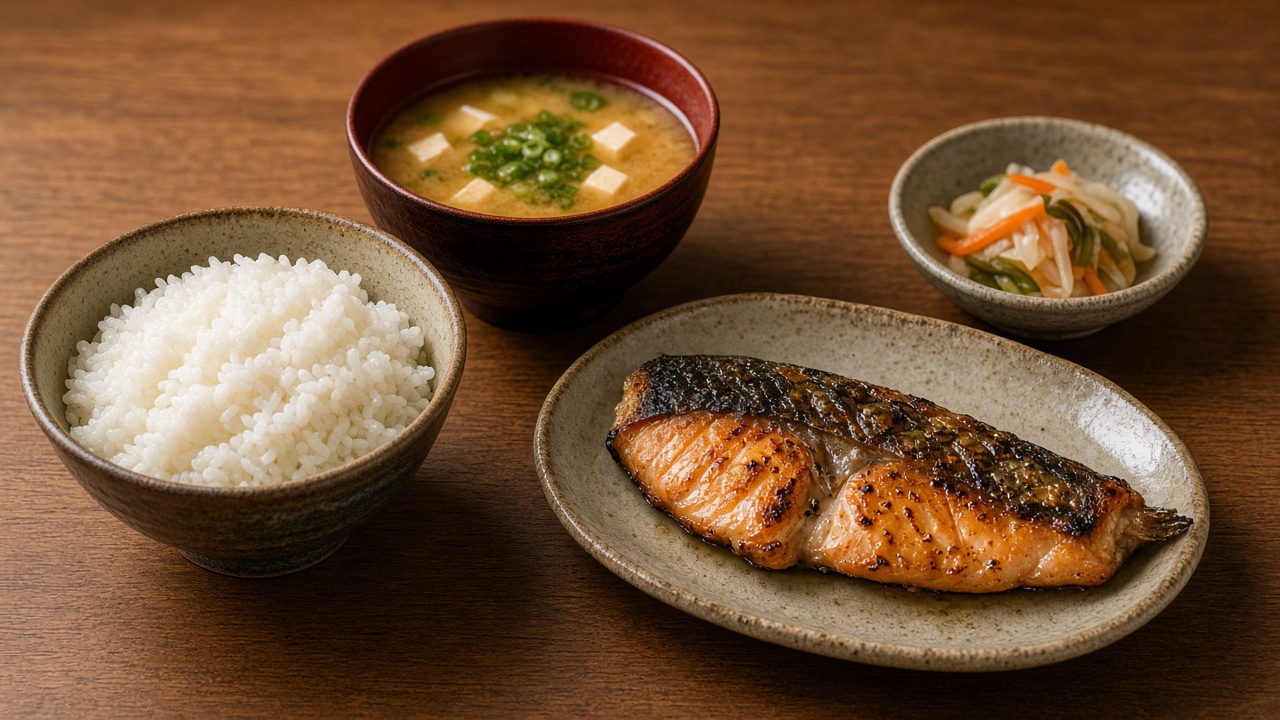
    Short answer: The “5.5 cups” on a Japanese rice cooker means 5.5 of its included rice cups of raw short-grain white rice. Each rice cup is about 180 mL, roughly 3/4 of a US cup. Zojirushi says raw rice doubles once cooked, so a full batch makes about 11 rice-cups’ worth of cooked rice.

    How we compare: every spec in this article comes from official manufacturer specifications and manuals (starting with Zojirushi’s official product page), all listed under Sources below. We don’t run hands-on tests, and if a spec isn’t published, we say so. Last updated: October 2026.

    I live in Japan, where the rice cup is a unit of its own. It’s called a gō (合), and a “5.5-gō” cooker is the standard family size here. That’s where the odd “5.5” comes from.

    I haven’t weighed or cooked test batches for this article. It uses Zojirushi’s and Tiger’s official specs and FAQ, linked at the end.

    Quick Reference Table

    Item Official figure Source
    Zojirushi rice cup Approx. 180 mL / 6.1 fl. oz. Zojirushi product pages
    Zojirushi rice cup in US terms “About 3/4 of a U.S. measuring cup” Zojirushi FAQ
    What capacity is measured in Raw short-grain white rice Zojirushi FAQ
    Volume change when cooked Raw rice “will double in volume” Zojirushi FAQ
    5.5-cup model capacity Up to 5.5 cups / 1.0 liter Zojirushi NS-TSC10 page
    10-cup model capacity Up to 10 cups / 1.8 liters Zojirushi NS-TSC18 page
    Tiger rice cup About 0.18 L, about 150 g Tiger JAX-T manual
    Minimum white rice, NS-ZCC10 1 cup Zojirushi grains guide
    Maximum brown rice, NS-ZCC10 4 cups Zojirushi grains guide
    Cooked rice per person Not listed —

    The Cup Is Not a US Cup

    Every Zojirushi cooker comes with a plastic measuring cup. Zojirushi’s FAQ describes it as about 6 ounces, or about 3/4 of a US measuring cup, based on the traditional Japanese measure called “masu.” Product pages give it as approx. 180 mL (6.1 fl. oz.).

    Tiger uses the same idea. The JAX-T manual lists the measuring cup as about 0.18 L, about 150 g of rice.

    So if you measure rice with a US 1-cup measure and fill to the “3” water line, you’ll have more rice than the cooker expects. Always use the cup that came in the box.

    So How Much Does 5.5 Cups Make?

    Using Zojirushi’s own numbers:

    Raw rice (rice cups) Raw volume (approx.) Cooked volume (approx., doubled)
    1 cup 180 mL 360 mL
    3 cups 540 mL 1,080 mL
    5.5 cups 990 mL 1,980 mL

    That cooked column is just the official “doubles in volume” rule applied to 180 mL. It’s an approximation, and different rice varieties and water amounts will change it.

    How many people does that feed? Zojirushi’s FAQ doesn’t define a serving, so I’m not going to claim a number of servings. What I can say is that in Japan, the 5.5-gō size is the usual pick for a family home, while 3-gō models are aimed at people living alone. I compared two 3-cup models in NS-LGC05 vs NL-BAC05.

    Brown Rice and Other Grains Hold Less

    The 5.5-cup capacity applies to white rice. Zojirushi says “other grains may vary,” and its grains guide for the NS-ZCC10 shows the difference: white rice from 1 to 5.5 cups, but brown rice from 1 to 4 cups, and some mixed settings to 3 cups.

    If you mostly cook brown rice, check the manual for your exact model before picking a size. A 5.5-cup cooker won’t take 5.5 cups of brown rice.

    Who Should Pick Which Size?

    A 3-cup cooker may suit you if you:

    • Cook for one or two
    • Want the smallest footprint

    A 5.5-cup cooker may suit you if you:

    • Cook for a small family, or cook once and keep leftovers
    • Want the widest choice of models, like the NS-TSC10, NL-AAC10, and Tiger JAX-T10U

    A 10-cup cooker may suit you if you:

    • Regularly cook more than about 5 rice cups of raw rice
    • Cook a lot of brown rice and want headroom

    For a direct size comparison within one model line, see NS-TSC10 vs NS-TSC18.

    The Cup, Explained from Japan

    The odd 180 mL “cup” makes sense once you know the Japanese unit behind it: the go (合). Japanese rice cookers are sized in go, so a 5.5-cup cooker is a 5.5-go (5.5合) model, and the 10-cup size is 1 shō (1升), which is 10 go. Zojirushi Japan rates the 5.5-go class at 0.09–1.0 L and the 1-shō class at 0.18–1.8 L of white rice. Tiger Japan uses the same naming for its 5.5-go JBH-B100. Many Japanese recipes and rice bags use go, too, so the measuring cup that comes with the cooker is the one to use.

    On Kakaku.com, Japanese reviewers of Zojirushi’s 3-go NL-BE05 often mention its compact size, simple controls and easy cleaning (just the inner pot and lid); complaints include a side-mounted cord and, in one review, coating that peeled within a year. (Third-party reviews, not our own testing.)

    Frequently Asked Questions

    Is a rice cooker cup the same as a US cup?

    No. Zojirushi’s cup is about 180 mL, or about 3/4 of a US cup.

    Why is it 5.5 cups instead of 5 or 6?

    The size comes from the Japanese gō unit. The 5.5-gō size is a common Japanese standard; the manufacturers’ US pages simply state “up to 5.5 cups.”

    Does the 5.5 refer to cooked or uncooked rice?

    Uncooked. Zojirushi states capacity is measured in raw short-grain white rice.

    How much cooked rice does one cup make?

    Zojirushi says raw rice doubles in volume once cooked, so roughly 360 mL from one 180 mL cup.

    Can I cook just one cup?

    On the NS-ZCC10, Zojirushi’s grains guide lists a minimum of 1 cup for white rice. Minimums vary by model.

    Can I use any measuring cup?

    Use the one included. Water lines in the inner pan are designed around it.

    Sources

    Specs checked October 2026. Prices and availability change, so check the current listing before buying.
  • Tiger JBV-A10U vs Zojirushi NS-TSC10: Which to Buy?

    Tiger JBV-A10U vs Zojirushi NS-TSC10: Which to Buy?

    As an Amazon Associate, TidyJapan earns from qualifying purchases. Links marked ‘Check price’ are affiliate links.

    Short answer: both are 5.5-cup (1 liter) micom rice cookers made in China. The Tiger JBV-A10U’s standout feature is “tacook,” which cooks a side dish on a tray above the rice at the same time. The Zojirushi NS-TSC10 offers more menu settings, including steam, cake, porridge, and brown rice, plus extended keep warm and a delay timer.

    How we compare: every spec in this article comes from official manufacturer specifications and manuals (starting with Tiger’s official product page and Zojirushi’s official product page), all listed under Sources below. We don’t run hands-on tests, and if a spec isn’t published, we say so. Last updated: October 2026.

    I live in Japan, where Tiger and Zojirushi are the two rice cooker brands almost everyone knows. Both are Japanese companies.

    I haven’t tested these two cookers myself. This comparison uses the official Tiger USA and Zojirushi USA product pages. Where a detail isn’t on the official page, I say so.

    Quick Comparison Table

    Spec Tiger JBV-A10U Zojirushi NS-TSC10
    Heating system Micom + heating Micro computerized fuzzy logic
    Capacity 1 L (34 oz), sold as 5.5-cup Up to 5.5 cups / 1.0 liter
    Dimensions (W x D x H) 10.6 x 13.9 x 8.4 in (27 x 35.3 x 21.4 cm), approx. 10-1/8 x 14 x 8-1/2 in
    Weight 5.7 lb (2.6 kg), approx. Not listed on product page
    Electrical rating 120 V / 672 W 120 V / 610 W
    Color White Stainless Brown (-XJ)
    Signature feature tacook synchronized cooking (cooking plate) Steam menu + included steaming basket
    Menu settings Not fully listed on official page* White/sushi, mixed, porridge, sweet, brown, cake, steam, quick
    Keep warm Not detailed on official page* Automatic, extended keep warm, reheat
    Delay timer Not detailed on official page* 2 settings
    Made in China China
    Where to buy Tiger JBV-A10U NS-TSC10

    *Tiger’s official US page lists dimensions, wattage, weight, and the tacook feature in its spec table, but I couldn’t confirm a full menu list or keep-warm duration there. Check the Amazon listing or Tiger’s manual before relying on those details.

    Key differences at a glance

    • Cooking style: The Tiger cooks a side dish on its tacook plate above the rice, while the Zojirushi has a steam setting and a steaming basket.
    • Menus: Zojirushi lists eight NS-TSC10 settings, including porridge, cake, and steam, while Tiger’s spec table doesn’t list menus the same way.
    • Size and weight: The footprints are close (about 10.6 x 13.9 x 8.4 in vs 10-1/8 x 14 x 8-1/2 in), and only Tiger lists a weight (about 5.7 lb).
    • Power rating: The JBV-A10U is rated at 672 W and the NS-TSC10 at 610 W.

    Key Differences, Explained

    tacook vs a steaming basket

    Tiger says the JBV-A10U lets you “prepare two dishes simultaneously” with its tacook function. A cooking plate sits above the rice, and Tiger says it’s designed so the side dish’s flavors don’t affect the rice.

    The Zojirushi NS-TSC10 takes a different route. It has a dedicated steam menu and comes with a steaming basket.

    If one-pot rice plus a main dish appeals to you, tacook is Tiger’s selling point.

    Zojirushi lists eight NS-TSC10 settings: white/sushi, mixed, porridge, sweet, brown, cake, steam, and quick. Tiger’s official spec table for the JBV-A10U doesn’t list menus in the same way, so I can’t compare menus one to one from official sources.

    Size and weight

    The footprints are close:

    • Tiger: about 10.6 x 13.9 x 8.4 inches
    • Zojirushi: 10-1/8 x 14 x 8-1/2 inches

    Tiger lists a weight of about 5.7 lb. Zojirushi’s product page doesn’t list weight.

    Power

    The JBV-A10U is rated at 672 W and the NS-TSC10 at 610 W. That’s a small difference. Neither official page lists energy use per cooking cycle.

    Who Should Buy Which?

    Choose the Tiger JBV-A10U if you:

    • Want to cook rice and a simple main or side at the same time (tacook)
    • Like a white finish
    • Want a straightforward micom cooker

    Choose the Zojirushi NS-TSC10 if you:

    • Want clearly listed brown, porridge, sweet rice, cake, and steam settings
    • Want extended keep warm and a 2-setting delay timer
    • Prefer a stainless exterior

    Bigger Sizes

    Both brands make a 10-cup version. Tiger lists the JBV-A18U at 941 W, and Zojirushi lists the NS-TSC18 at 820 W.

    Before You Buy

    Check two things on the current listing: the exact model number (JBV-A10U vs JBV-A18U, and NS-TSC10 vs NS-TSC10A, which has a different menu) and what’s in the box. Tiger and Zojirushi both sell similarly named models, and marketplace listings sometimes mix up sizes and colors.

    Tiger’s tacook feature is also on the made-in-Japan JAX-T10U, which I compared in Tiger JAX-T10U vs Zojirushi NL-AAC10. For the NS-TSC10’s running cost, see NS-TSC10 power consumption.

    What Tiger and Zojirushi Sell at Home

    Both brands are Osaka-based, and both sell different numbers in Japan. Tiger Japan’s basic micom line is the JBH-B “Takitate” (炊きたて): the 5.5-go JBH-B100 is rated at 635 W maximum, uses a 1.7 mm black far-infrared thick pot, and has a count-down style delay timer. Zojirushi Japan’s 5.5-go lineup likewise uses its own numbers rather than NS-TSC10. These aren’t the same machines as the US JBV-A10U and NS-TSC10, but they show that a plain micom cooker remains a normal everyday choice in Japan. Japan-market models run on 100 V (US models use 120 V), so they aren’t drop-in substitutes.

    On Kakaku.com, Japanese reviewers of Zojirushi’s 3-go NL-BE05 often mention its compact size, simple controls and easy cleaning (just the inner pot and lid); complaints include a side-mounted cord and, in one review, coating that peeled within a year. (Third-party reviews, not our own testing.)

    JBV-A10U vs Zojirushi NS-TSC10: Frequently Asked Questions

    Are Tiger and Zojirushi both Japanese brands?

    Yes, both are Japanese companies. These two specific models are listed as made in China.

    What is tacook?

    It’s Tiger’s synchronized cooking function. A cooking plate above the rice lets you cook a second dish at the same time as the rice.

    Which is bigger?

    They’re very close. The Tiger is about 10.6 x 13.9 x 8.4 inches, and the Zojirushi is 10-1/8 x 14 x 8-1/2 inches.

    Which uses less power?

    By rated wattage, the Zojirushi NS-TSC10 (610 W) is a little lower than the Tiger JBV-A10U (672 W).

    Does the Zojirushi NS-TSC10 have a cake setting?

    Yes. Zojirushi lists a cake menu setting.

    Sources

    Specs checked October 2026.

  • Zojirushi NP-HCC10 vs NW-JEC10: Is Pressure IH Worth It?

    Zojirushi NP-HCC10 vs NW-JEC10: Is Pressure IH Worth It?

    As an Amazon Associate, TidyJapan earns from qualifying purchases. Links marked ‘Check price’ are affiliate links.

    Short answer: both are made-in-Japan induction heating cookers with almost identical wattage (1,230 W vs 1,240 W). The NW-JEC10 adds pressure cooking (up to 19.1 psi), an AI “My Rice” setting that adjusts to your feedback, and a much longer menu. Get the NP-HCC10 if standard IH covers your needs; get the NW-JEC10 if you want pressure and the most menu options.

    How we compare: every spec in this article comes from official manufacturer specifications and manuals (starting with Zojirushi’s official product page), all listed under Sources below. We don’t run hands-on tests, and if a spec isn’t published, we say so. Last updated: October 2026.

    I live in Japan, where pressure IH rice cookers sit at the top of the shelf in electronics stores.

    I haven’t tested either model. This comparison uses Zojirushi’s official US product pages only.

    Quick Comparison Table

    Spec NP-HCC10 NW-JEC10
    Heating Induction Heating (IH), triple heater Pressure + IH, “premium convection”
    Pressure None listed Up to 19.1 psi
    AI / learning Not listed AI fuzzy logic; “My Rice (49 Ways)”
    Capacity Up to 5.5 cups / 1.0 liter Up to 5.5 cups / 1.0 liter
    Dimensions (W x D x H) 10 x 14 x 8 in 10-3/4 x 13-5/8 x 8-1/2 in
    Electrical rating 120 V / 1,230 W 120 V / 1,240 W
    Color Stainless Dark Gray (-XH) Silky Black (-BA)
    Inner pan Black thick spherical pan Iron coated & platinum infused nonstick (2.2 mm)
    White rice options Regular, softer, harder Regular, soft, softer, firm, firmer
    Other menus Jasmine white, mixed, sushi, porridge, sweet, brown, GABA brown, quick Umami, mixed, sushi, Jasmine, porridge, congee, brown, GABA brown, steel cut oatmeal, quick white, quick Jasmine
    Self-cleaning Not listed Yes (reduces odor)
    Inner lid Detachable, washable stainless Detachable, washable
    Made in Japan Japan
    Where to buy NP-HCC10 NW-JEC10

    Key differences at a glance

    • Pressure cooking: The NW-JEC10 cooks under pressure (up to 19.1 psi), while the NP-HCC10 page lists no pressure function.
    • AI and My Rice: The NW-JEC10 learns from your feedback with its “My Rice (49 Ways)” setting, while the NP-HCC10 lists no such feature.
    • Menus: The NW-JEC10 has five white rice textures plus umami, congee, and steel cut oatmeal, while the NP-HCC10 has three textures, jasmine, and GABA brown.
    • Inner pan: The NW-JEC10 lists a 2.2 mm iron-coated, platinum-infused pan, while the NP-HCC10 lists a thick spherical pan with no thickness figure.
    • Power rating: The two are nearly identical at 1,230 W (NP-HCC10) and 1,240 W (NW-JEC10).

    Key Differences, Explained

    Pressure cooking

    This is the headline difference. Zojirushi says the NW-JEC10’s pressurized cooking and steaming “promote gelatinization and produce sticky and plump rice,” with pressure up to 19.1 psi. The NP-HCC10 page doesn’t list pressure cooking.

    “My Rice (49 Ways)” and AI

    The NW-JEC10 lets you tell the cooker how your rice turned out. It then adjusts the cooking flow over time, which Zojirushi calls “My Rice (49 Ways).” Its fuzzy logic also uses AI to “learn” from past cooking. The NP-HCC10 doesn’t list either feature.

    The NW-JEC10 offers more choices:

    • Five white rice textures
    • Umami, congee, and steel cut oatmeal settings
    • Separate quick white and quick Jasmine settings

    The NP-HCC10 still covers jasmine, GABA brown, and three white textures.

    Inner pan

    The NW-JEC10 lists a 2.2 mm iron coated, platinum infused nonstick pan. The NP-HCC10 lists a “black thick spherical” pan without a thickness figure.

    Size and power

    The wattage is nearly the same (1,230 W vs 1,240 W). The NW-JEC10 is 3/4 inch wider and half an inch taller. The NP-HCC10 is 3/8 inch deeper.

    Who Should Buy Which?

    Choose the NP-HCC10 if you:

    • Want made-in-Japan IH without pressure
    • Are happy with three white rice textures
    • Want GABA brown and jasmine settings

    Choose the NW-JEC10 if you:

    • Want pressure cooking for stickier, plumper rice (Zojirushi’s description)
    • Like the idea of a cooker that adjusts to your feedback
    • Cook oatmeal, congee, or want an umami setting
    • Want a self-cleaning function

    Counter Space Check

    Both models are 5.5-cup cookers, but measure before you buy. The NW-JEC10 needs 10-3/4 inches of width, and the NP-HCC10 needs 10. Leave room above for the lid to open and for steam to escape. Zojirushi’s pages don’t list a recommended clearance, so check the instruction manual for that.

    What About the NW-QAC10?

    Shoppers often compare the NP-HCC10 with the NW-QAC10, another Zojirushi pressure IH model. I haven’t verified the NW-QAC10’s specs on Zojirushi’s site for this article, so it isn’t included in the table. Check Zojirushi’s official page before comparing it.

    Wondering whether you need induction at all? I compared the NP-HCC10 with a micom model in NS-TSC10 vs NP-HCC10. And if you’re outfitting a whole kitchen, Zojirushi’s water boilers are covered in CD-NAC40 vs CV-JAC40.

    Pressure IH: The Japan Context

    Pressure IH (圧力IH) is the mainstream premium category in Japan, and Zojirushi Japan’s 5.5-go lineup includes several pressure IH lines. One of its high-end models, the NW-FB10 “Enbu-daki” (炎舞炊き), is rated at 1,240 W, offers 1.0–1.3 atmospheres of pressure depending on the menu, and keeps rice warm for up to 40 hours on some menus. It’s a Japan-market model built for 100 V, not a renamed NW-JEC10 or NP-HCC10, but it shows where the category is heading: more pressure control and more menu tuning rather than raw wattage.

    Japanese reviewers on Kakaku.com often praise the NW-FB10’s flavor, gloss and distinct grains, while some call it large and heavy for a 5.5-go cooker; several posts on its discussion board complain that rice kept warm for many hours turns hard or yellowish. (Third-party reviews, not our own testing.)

    NP-HCC10 vs NW-JEC10: Frequently Asked Questions

    Are both made in Japan?

    Yes. Zojirushi lists both the NP-HCC10 and NW-JEC10 as made in Japan.

    Does the NP-HCC10 pressure cook?

    Pressure cooking isn’t listed on the NP-HCC10’s official page. The NW-JEC10 lists pressure up to 19.1 psi.

    Which uses more electricity?

    They’re rated almost the same: 1,230 W (NP-HCC10) vs 1,240 W (NW-JEC10). Zojirushi doesn’t list energy per cycle on these pages.

    What is “My Rice (49 Ways)”?

    It’s an NW-JEC10 setting. You input how the rice turned out, and the cooker makes small changes to its cooking flow until it matches your preference.

    Do both have GABA brown?

    Yes. Both list GABA brown rice settings.

    Is there a 10-cup version?

    Yes. Zojirushi lists the NP-HCC18 at 1,350 W and the NW-JEC18 at 1,370 W.

    Sources

    Specs checked October 2026.

  • Zojirushi NS-TSC10 vs NS-ZCC10: Micom or Neuro Fuzzy?

    Zojirushi NS-TSC10 vs NS-ZCC10: Micom or Neuro Fuzzy?

    As an Amazon Associate, TidyJapan earns from qualifying purchases. Links marked ‘Check price’ are affiliate links.

    Short answer: the NS-ZCC10 (Neuro Fuzzy) is the rice-focused model. It’s made in Japan, has a spherical inner pan, and offers more white rice texture and brown rice options. The NS-TSC10 is the more versatile appliance, with steam and cake settings and an included steaming basket.

    How we compare: every spec in this article comes from official manufacturer specifications and manuals (starting with Zojirushi’s official product page), all listed under Sources below. We don’t run hands-on tests, and if a spec isn’t published, we say so. Last updated: October 2026.

    I live in Japan, where the Neuro Fuzzy line is one of the Zojirushi names people recognize most.

    I haven’t cooked side by side with these two models. This article compares Zojirushi’s official US specifications only.

    Quick Comparison Table

    Spec NS-TSC10 NS-ZCC10
    Technology Micro computerized fuzzy logic Advanced Neuro Fuzzy logic
    Capacity Up to 5.5 cups / 1.0 liter Up to 5.5 cups / 1.0 liter
    Dimensions (W x D x H) 10-1/8 x 14 x 8-1/2 in 10 x 13-1/8 x 8-1/4 in
    Electrical rating 120 V / 610 W 120 V / 680 W
    Color Stainless Brown (-XJ) Premium White (-WZ)
    Inner pan Black thick inner pan Spherical inner pan and heating system
    Menu settings White/sushi, mixed, porridge, sweet, brown, cake, steam, quick White (regular/sushi, softer, harder), mixed, porridge, sweet, semi-brown, brown, rinse-free, quick
    Keep warm Automatic, extended, reheat Automatic, extended, reheat
    Delay timer 2 settings 2 settings
    Display LCD with clock and timer Colored LCD with clock and timer
    Accessories Steaming basket, rice cup, spatula, holder Rice cup, rinse-free rice cup, spatula, holder
    Power cord Built-in retractable Built-in retractable
    Made in China Japan
    Where to buy NS-TSC10 NS-ZCC10

    Key differences at a glance

    • Rice texture: The NS-ZCC10 offers softer/harder white rice plus semi-brown and rinse-free settings, while the NS-TSC10 does not.
    • Steam and cake: The NS-TSC10 has steam and cake settings with a steaming basket, while the NS-ZCC10 lists neither.
    • Size: The NS-ZCC10 is nearly an inch shallower (10 x 13-1/8 x 8-1/4 in vs 10-1/8 x 14 x 8-1/2 in).
    • Power rating: The ratings are close: 610 W for the NS-TSC10 and 680 W for the NS-ZCC10.
    • Country of manufacture: Zojirushi lists the NS-ZCC10 as made in Japan and the NS-TSC10 as made in China.

    Key Differences, Explained

    1. Rice texture and brown rice options

    The NS-ZCC10 lets you pick softer or harder white rice. It also has semi-brown and rinse-free settings, and it comes with a dedicated rinse-free rice measuring cup.

    Rinse-free rice (musenmai) is common in Japan. It’s rice that’s already been polished, so you don’t need to wash it before cooking. If you buy it at an Asian grocery store, the NS-ZCC10 has a setting made for it.

    2. Steam and cake

    The NS-TSC10 lists steam and cake settings and includes a steaming basket. The NS-ZCC10 doesn’t list either.

    3. Size

    The NS-ZCC10 is a bit more compact: 10 x 13-1/8 x 8-1/4 inches, against 10-1/8 x 14 x 8-1/2 inches for the NS-TSC10. That’s nearly an inch less depth.

    4. Power

    The ratings are close, 610 W (NS-TSC10) and 680 W (NS-ZCC10). Neither page lists energy use per cycle.

    5. Country of manufacture

    Zojirushi lists the NS-ZCC10 as made in Japan and the NS-TSC10 as made in China.

    What “Neuro Fuzzy” means, per Zojirushi

    Zojirushi says Neuro Fuzzy logic lets the cooker “think” for itself and make fine adjustments to temperature and heating time. The NS-TSC10’s micom fuzzy logic also adjusts temperature and time automatically. The official pages don’t quantify how the two differ in results, so I won’t claim one makes better rice.

    Who Should Buy Which?

    Choose the NS-TSC10 if you:

    • Want to steam vegetables or dumplings in the same appliance
    • Want a cake setting
    • Like the stainless brown finish

    Choose the NS-ZCC10 if you:

    • Mostly cook rice and want softer/harder control
    • Cook semi-brown, brown, or rinse-free rice
    • Want a slightly smaller footprint
    • Prefer a model made in Japan

    Need 10 cups? Zojirushi lists the NS-TSC18 at 820 W and the NS-ZCC18 at 1,000 W.

    A Note on Cleaning and Storage

    Both cookers have a detachable inner lid and a built-in retractable power cord, per Zojirushi. The NS-ZCC10 page also mentions stay-cool side handles on the inner pan. The NS-TSC10 has a clear-coated stainless exterior that Zojirushi describes as easy to clean. In practice, these details matter more than they seem in a small kitchen, where the cooker may live in a cabinet between meals.

    If the NS-TSC10’s flexibility appeals to you, compare it with the made-in-Japan NL-AAC10. For what the 5.5-cup rating means in cooked rice, see how much rice a 5.5-cup cooker makes.

    Micom vs Neuro Fuzzy, Seen from Japan

    “Neuro Fuzzy” is a US marketing name. In Japan, Zojirushi sorts its cookers mainly by heating method: マイコン (micom), IH (induction), and 圧力IH (pressure induction), and its domestic 5.5-go lineup spans all three. Both the NS-TSC10 and NS-ZCC10 sit in the micom category, heated from below by a plate rather than by induction. Japanese shoppers who want to step up usually move to IH rather than to a fancier micom model.

    On Kakaku.com, Japanese reviewers of Zojirushi’s 3-go NL-BE05 often mention its compact size, simple controls and easy cleaning (just the inner pot and lid); complaints include a side-mounted cord and, in one review, coating that peeled within a year. (Third-party reviews, not our own testing.)

    NS-TSC10 vs NS-ZCC10: Frequently Asked Questions

    Is the NS-ZCC10 better than the NS-TSC10?

    It depends on what you cook. The NS-ZCC10 has more rice-specific options (texture, semi-brown, rinse-free). The NS-TSC10 adds steam and cake settings. Zojirushi doesn’t publish comparative taste test results.

    Can the NS-ZCC10 steam food?

    Steam isn’t among its listed menu settings, and no steaming basket is listed. The NS-TSC10 has both.

    What is the rinse-free setting?

    It’s for rinse-free rice, which is cooked without washing first. The NS-ZCC10 includes a separate rinse-free measuring cup.

    Which one is made in Japan?

    The NS-ZCC10. The NS-TSC10 is listed as made in China.

    Which uses more power?

    By rated wattage, the NS-ZCC10 (680 W) is slightly higher than the NS-TSC10 (610 W).

    Sources

    Specs checked October 2026.

  • Zojirushi NS-TSC10 vs NS-TSC10A: What’s the Difference?

    Zojirushi NS-TSC10 vs NS-TSC10A: What’s the Difference?

    As an Amazon Associate, TidyJapan earns from qualifying purchases. Links marked ‘Check price’ are affiliate links.

    Short answer: yes. They share the same 5.5-cup capacity and 610 W rating, but the NS-TSC10A swaps porridge, sweet rice, and cake for long grain white, steel cut oatmeal, and quinoa settings. The NS-TSC10A also comes in Stainless Gray, is 1/8 inch taller, and adds a mute option for its sound signal.

    How we compare: every spec in this article comes from official manufacturer specifications and manuals (starting with Zojirushi’s official product page), all listed under Sources below. We don’t run hands-on tests, and if a spec isn’t published, we say so. Last updated: October 2026.

    I live in Japan, where Zojirushi releases updated versions of familiar models all the time. A letter added to the end of a model number usually means a revision, not a whole new product.

    I haven’t used both models. This comparison relies only on Zojirushi’s official US product pages.

    Quick Comparison Table

    Spec NS-TSC10 NS-TSC10A
    Technology Micro computerized fuzzy logic Advanced micro computerized fuzzy logic
    Capacity Up to 5.5 cups / 1.0 liter 5.5 cups / 1.0 liter
    Dimensions (W x D x H) 10-1/8 x 14 x 8-1/2 in 10-1/8 x 14 x 8-5/8 in
    Electrical rating 120 V / 610 W 120 V / 610 W
    Color Stainless Brown (-XJ) Stainless Gray (-XH)
    Menu settings White/sushi, mixed, porridge, sweet, brown, cake, steam, quick White/sushi, mixed, quick, long grain white, steel cut oatmeal, quinoa, brown, steam
    Keep warm Automatic, extended, reheat Automatic, extended, reheat
    Delay timer 2 settings 2 settings
    Sound signal Melody or beep Melody, beep, or mute
    LCD battery note Not listed LCD switches off when unplugged to save internal battery
    BPA-free statement Not listed Yes (food-contact surfaces)
    Power cord Built-in retractable Built-in retractable
    Made in China China
    Manual languages English, French, Traditional Chinese, Korean, Japanese English, French, Traditional Chinese (Japanese online)
    Where to buy NS-TSC10 NS-TSC10A

    Key differences at a glance

    • Menus: The NS-TSC10 lists porridge, sweet rice, and cake, while the NS-TSC10A swaps those for long grain white, steel cut oatmeal, and quinoa.
    • Color and height: The NS-TSC10 is Stainless Brown and 8-1/2 in tall, while the NS-TSC10A is Stainless Gray and 1/8 inch taller.
    • Sound signal: The NS-TSC10A lets you mute the sound signal, which the NS-TSC10 page does not mention.
    • What stays the same: Both have a 610 W rating, 5.5-cup capacity, a 2-setting delay timer, extended keep warm and reheat, a steam setting, a retractable cord, and Chinese manufacture.

    The Differences, Explained

    The two models share white/sushi, mixed, brown, steam, and quick cooking. After that, they split:

    • Only on the NS-TSC10: porridge, sweet (sticky) rice, and cake.
    • Only on the NS-TSC10A: long grain white, steel cut oatmeal, and quinoa.

    So the choice depends on what you cook. If you want to make rice porridge (okayu) or sweet rice, or try rice-cooker cakes, the original NS-TSC10 lists those settings. If you cook jasmine-style long grain rice, oatmeal, or quinoa, the NS-TSC10A is a better match.

    Color and height

    The NS-TSC10 is Stainless Brown, and the NS-TSC10A is Stainless Gray. The NS-TSC10A is listed at 8-5/8 inches tall, 1/8 inch taller than the NS-TSC10’s 8-1/2 inches. The width and depth are the same.

    Small quality-of-life updates

    The NS-TSC10A lets you mute the sound signal. Its LCD switches off when unplugged to conserve the internal battery, and Zojirushi notes that food-contact surfaces are BPA-free. Those statements don’t appear on the NS-TSC10 page. That doesn’t necessarily mean the older model lacks them, only that they aren’t listed.

    What’s identical

    Both have:

    • 610 W rating and 5.5-cup capacity
    • 2-setting delay timer
    • Automatic keep warm, extended keep warm, and reheat
    • Steam setting
    • Retractable cord
    • Clear-coated stainless exterior

    Both are made in China.

    How to Tell Which One You’re Looking At

    Retail listings sometimes shorten model names, so check the full model number and color code before you check out. The NS-TSC10 ends in -XJ (Stainless Brown), and the NS-TSC10A ends in -XH (Stainless Gray), per Zojirushi. If a listing shows a gray cooker but says “NS-TSC10” without the A, ask the seller or check the photos of the menu panel. Only the NS-TSC10A’s panel will show quinoa and steel cut oatmeal.

    Which Should You Buy?

    Choose the NS-TSC10 if you:

    • Make porridge or sweet rice
    • Want a cake setting
    • Like the Stainless Brown look

    Choose the NS-TSC10A if you:

    • Cook long grain rice, steel cut oatmeal, or quinoa
    • Want to mute the beeps (handy in small apartments)
    • Prefer Stainless Gray

    The 10-cup versions follow the same pattern. Zojirushi lists the NS-TSC18 at 820 W and the NS-TSC18A at 820 W.

    Both versions share the 610 W rating, so my NS-TSC10 power consumption breakdown applies to either. If you need more capacity, see NS-TSC10 vs NS-TSC18.

    The View from Tokyo: Model Letters and Suffixes

    Japanese appliance makers routinely update a model by tweaking the letters or adding a suffix, and Zojirushi’s Japanese catalog works the same way: its rice cooker lineup lists each model with a size number (10 for 5.5-go, 18 for 1-shō) plus a color code such as -BA (black) or -WA (white). That’s why the NS-TSC10 and NS-TSC10A look nearly identical on paper. Zojirushi Japan’s own micom models use different numbers. Japanese-market appliances are built for Japan’s 100 V household supply, while US models are made for 120 V, so a Japan-only model isn’t a drop-in substitute for a US kitchen.

    On Kakaku.com, Japanese reviewers of Zojirushi’s 3-go NL-BE05 often mention its compact size, simple controls and easy cleaning (just the inner pot and lid); complaints include a side-mounted cord and, in one review, coating that peeled within a year. (Third-party reviews, not our own testing.)

    NS-TSC10 vs NS-TSC10A: Frequently Asked Questions

    Is the NS-TSC10A a newer version of the NS-TSC10?

    The naming suggests a revision, and the menu changes support that. Zojirushi’s product pages don’t call it a replacement, though, so treat that as unconfirmed.

    Do both have a steam setting?

    Yes. Both list steam among their menu settings.

    Does the NS-TSC10A have a cake setting?

    Cake isn’t among the NS-TSC10A’s listed menu settings. It is listed on the NS-TSC10.

    Do they use the same amount of power?

    They have the same rating: 120 V / 610 W for both 5.5-cup models.

    Can I turn off the beeping?

    On the NS-TSC10A, Zojirushi says the sound signal can be set to melody, beep, or mute. The NS-TSC10 lists melody and beep.

    Are they the same size?

    Almost. Both are 10-1/8 x 14 inches. The NS-TSC10A is 8-5/8 inches tall and the NS-TSC10 is 8-1/2 inches.

    Sources

    Specs checked October 2026.

  • Zojirushi NS-LGC05 vs NL-BAC05: Best 3-Cup for One Person?

    Zojirushi NS-LGC05 vs NL-BAC05: Best 3-Cup for One Person?

    As an Amazon Associate, TidyJapan earns from qualifying purchases. Links marked ‘Check price’ are affiliate links.

    Short answer: both are 3-cup Zojirushi micom cookers that can cook as little as half a cup, so either one works for a single person. Pick the NS-LGC05 if you want the smallest footprint and a GABA brown rice setting; pick the NL-BAC05 if you want quinoa and cake settings, extended keep warm, and a detachable cord.

    How we compare: every spec in this article comes from official manufacturer specifications and manuals (starting with Zojirushi’s official product page), all listed under Sources below. We don’t run hands-on tests, and if a spec isn’t published, we say so. Last updated: October 2026.

    I live in Japan, where small 3-cup (3-gō) rice cookers are a standard choice for people living alone. Japan has a lot of one-person apartments, and these compact models are made for exactly that kind of life.

    I haven’t tested these two models side by side. This comparison uses only Zojirushi’s official US specifications, linked at the end.

    Quick Comparison Table

    Spec Zojirushi NS-LGC05 Zojirushi NL-BAC05
    Capacity Up to 3 cups / 0.54 liter Up to 3 cups / 0.54 liter
    Minimum amount As little as 1/2 cup of rice or oats As little as 1/2 cup of rice or grains
    Dimensions (W x D x H) 9-1/8 x 11-7/8 x 7-1/2 in 9-3/8 x 12-7/8 x 7-7/8 in
    Electrical rating 120 V / 450 W 120 V / 500 W
    Color Stainless Black (-XB) Silver Black (-SB)
    Technology Advanced fuzzy logic Advanced fuzzy logic
    Heater Triple heater (bottom, side, lid) Triple heater with extra large heating element (bottom, side, top)
    Menu settings White/mixed, sushi, brown, GABA brown, long grain white, steel cut oatmeal, quick White/sushi, brown, long grain white, steel cut oatmeal, quinoa, cake, quick
    Keep warm Automatic keep warm and reheating cycle Automatic keep warm, extended keep warm, reheat
    Delay timer Clock and timer functions (number of settings not listed) 2 settings
    Inner pan “Rinse OK” nonstick coated spherical pan 2.5 mm thick nonstick coated pan
    Power cord Built-in retractable Detachable
    Handle Fold-down Fold-down
    Steam vent cap Removable Removable
    Made in China China
    Where to buy NS-LGC05 NL-BAC05

    Capacity is based on Zojirushi’s approx. 180 mL rice cup with raw short-grain white rice.

    Key differences at a glance

    • Size: The NS-LGC05 is smaller in every direction, including a full inch shallower (11-7/8 vs 12-7/8 in).
    • Menus: The NS-LGC05 adds GABA brown rice, while the NL-BAC05 adds quinoa and cake settings.
    • Keep warm: Both keep warm and reheat, but only the NL-BAC05 lists extended keep warm.
    • Power cord: The NS-LGC05 has a retractable cord, while the NL-BAC05 has a detachable cord.
    • Power rating: The NS-LGC05 is rated at 450 W and the NL-BAC05 at 500 W, a small gap.

    Key Differences, Explained

    Size: the NS-LGC05 is a bit smaller

    If counter space is tight, the NS-LGC05 is the more compact of the two:

    • About 1/4 inch narrower (9-1/8 vs 9-3/8 in)
    • A full inch shallower (11-7/8 vs 12-7/8 in)
    • 3/8 inch shorter (7-1/2 vs 7-7/8 in)

    In a small apartment kitchen, that inch of depth can decide whether a cooker sits under your wall cabinets with room to open the lid. Measure your space first.

    The menus overlap a lot. Both have white, brown, long grain white, steel cut oatmeal, and quick cooking. The differences:

    • NS-LGC05: adds a GABA brown rice setting and lists a separate sushi rice setting.
    • NL-BAC05: adds quinoa (Zojirushi mentions white, red, black, or rainbow quinoa) and cake.

    If you eat quinoa often or want to try rice-cooker cakes, the NL-BAC05 fits. If brown rice is your staple and you want the GABA option, choose the NS-LGC05.

    Keep warm: extended keep warm only on the NL-BAC05

    Both keep rice warm automatically and can reheat. Only the NL-BAC05 lists extended keep warm, which Zojirushi says holds rice at a lower temperature to keep it from drying out.

    If you cook once and eat from the pot over several hours, that’s worth having.

    Cord style: retractable vs detachable

    The NS-LGC05 has a built-in retractable cord. The NL-BAC05 has a detachable cord. Both are easy to store; it’s a matter of preference.

    Power: 450 W vs 500 W

    Both draw little power by rice cooker standards, and the 50 W gap is small. Zojirushi doesn’t list per-cycle energy use on these pages.

    Which One for One Person?

    Choose the NS-LGC05 if you:

    • Have a very small counter or a shallow shelf
    • Eat brown rice and want the GABA brown setting
    • Like a retractable cord

    Choose the NL-BAC05 if you:

    • Cook quinoa regularly or want a cake setting
    • Leave rice on keep warm for long stretches (extended keep warm)
    • Want a clearly listed 2-setting delay timer
    • Prefer a detachable cord

    Is 3 cups enough for one person? Zojirushi markets the NS-LGC05 as “ideal for small families or couples.” Both models can cook as little as 1/2 cup. That gives a solo cook room to make extra for leftovers or meal prep while still handling single portions.

    Not sure a 3-cup cooker is big enough? I explained what the rice cup actually measures in how much rice a 5.5-cup cooker makes, and compared two 5.5-cup models in NS-TSC10 vs NL-AAC10.

    How 3-Cup Cookers Fit Into Japanese Kitchens

    The 3-cup size isn’t a US oddity: in Japan it’s sold as the 3-go (3合) class, aimed at one- or two-person households, and Zojirushi Japan’s support site lists home-market micom models in that size such as the NL-BE05. Model numbers differ from the US NS-LGC05 and NL-BAC05, and features aren’t necessarily matched one-to-one, so treat any Japanese model as a cousin rather than a twin. The rice cup is the same, though: one go is the roughly 180 mL cup Zojirushi includes with US models. Japan-market models run on 100 V (US models use 120 V), so they aren’t drop-in substitutes.

    On Kakaku.com, Japanese reviewers of Zojirushi’s 3-go NL-BE05 often mention its compact size, simple controls and easy cleaning (just the inner pot and lid); complaints include a side-mounted cord and, in one review, coating that peeled within a year. (Third-party reviews, not our own testing.)

    NS-LGC05 vs NL-BAC05: Frequently Asked Questions

    What’s the main difference between the NS-LGC05 and NL-BAC05?

    Menus and keep-warm options. The NS-LGC05 has GABA brown rice. The NL-BAC05 has quinoa, cake, and extended keep warm. The NS-LGC05 is also slightly smaller.

    Can both cook just half a cup of rice?

    Yes. Zojirushi says each can cook as little as 1/2 cup.

    Which one is smaller?

    The NS-LGC05 is 9-1/8 x 11-7/8 x 7-1/2 inches. The NL-BAC05 is 9-3/8 x 12-7/8 x 7-7/8 inches (W x D x H).

    Can they cook steel cut oatmeal?

    Yes. Both list a steel cut oatmeal setting.

    Are either of these made in Japan?

    No. Zojirushi lists both as made in China, in a Zojirushi factory.

    Do they have a removable inner lid?

    Yes. Both product pages list a detachable, washable inner lid.

    Sources

    Specs checked October 2026. Always confirm details on the current listing before buying.