As an Amazon Associate, TidyJapan earns from qualifying purchases. Links marked ‘Check price’ are affiliate links.
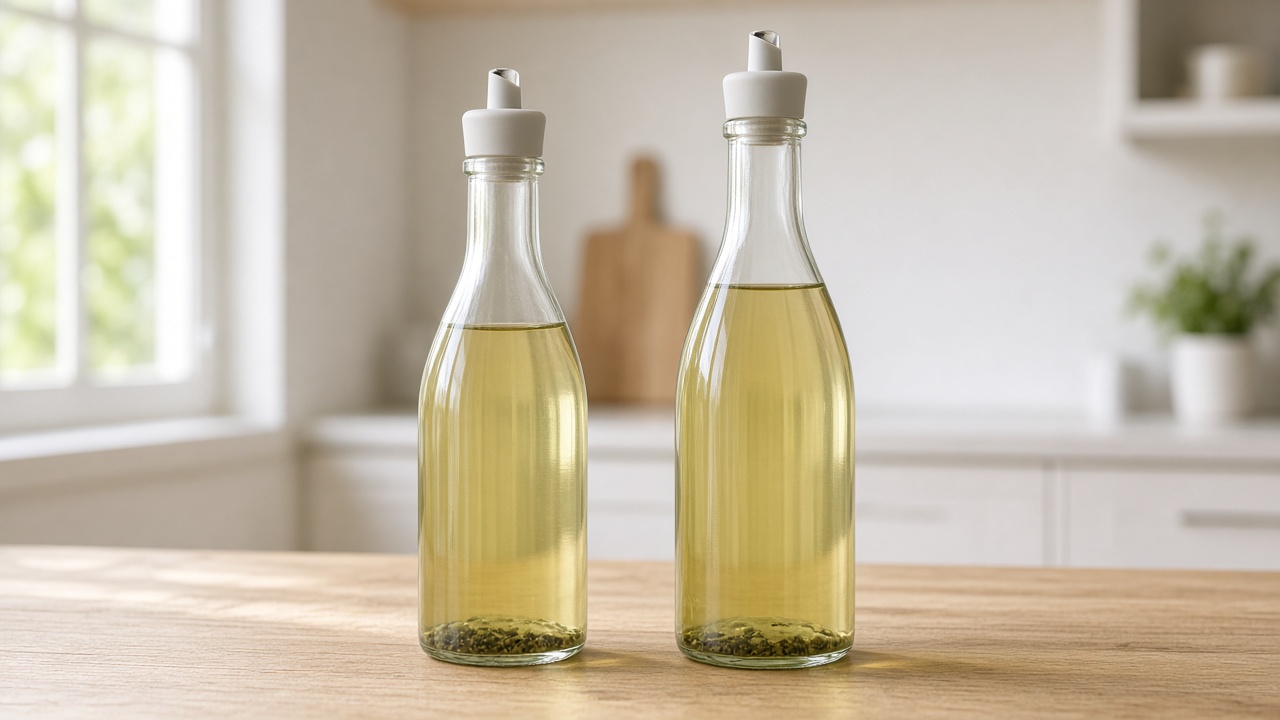
Short answer: Choose the Hario Filter-in Bottle 300 ml (FIB-30, about 10.1 fl oz) at $23.50 on Hario USA if you want a smaller personal cold-brew bottle. Choose the 750 ml (FIB-75, about 25.4 fl oz) at $27.50 if you want about two and a half times the tea for only $4 more — the better price per ounce at about $1.08 versus $2.32 (our math). Both are made-in-Japan heatproof-glass bottles with a removable silicone wine-style spout and a polypropylene filter. Hario’s manuals say to brew them in the refrigerator for 3 to 6 hours.
How we compare: every spec and price below comes from Hario’s official pages (Hario USA 300 ml, Hario USA 750 ml, Hario Japan, Hario Global, and HARIO NETSHOP), plus the size-specific manuals linked from Hario USA. We don’t run hands-on tests. Where we summarize Japanese third-party reviews, we say so. Last updated: November 2026.
Quick Comparison Table
| Spec | Filter-in Bottle 300 ml | Filter-in Bottle 750 ml |
|---|---|---|
| Hario USA name | Cold Brew Tea Wine Bottle, 300ml | Cold Brew Tea Wine Bottle |
| Capacity | Practical capacity 300 mL (about 10.1 fl oz; our conversion). Hario USA: “Practical Capacity: 300 Milliliters.” | Practical capacity 750 mL (about 25.4 fl oz; our conversion). Hario USA lists “Capacity: 750 Milliliters” (without the word “practical”); Hario Japan and Hario Global say practical capacity 750 mL. |
| Product numbers (by color) | FIB-30-SG Smoky Green, FIB-30-SPR Smoky Pink, FIB-30-W White (Hario USA SKUs HR-FIB-30-SG / HR-FIB-30-SPR / HR-FIB-30-W) | On Hario USA: FIB-75-OG Olive Green, FIB-75-SG Smoky Green, FIB-75-SPR Smoky Pink, FIB-75-W White, FIB-75-B Black (SKUs HR-FIB-75-OG / HR-FIB-75-SG / HR-FIB-75-SPR / HR-FIB-75-W / HR-FIB-75-B). Hario Japan, Hario Global, and HARIO NETSHOP list only SG, SPR, and W. |
| Hario USA price | $23.50 | $27.50 |
| Price per fluid ounce (our math) | about $2.32 | about $1.08 |
| Size | W 70 × D 68 × H 206 mm, mouth 57 mm (about 2.8 × 2.7 × 8.1 in, mouth 2.2 in; our conversions) | W 87 × D 84 × H 300 mm, mouth 71 mm (about 3.4 × 3.3 × 11.8 in, mouth 2.8 in; our conversions) |
| Weight (as officially labeled) | Approx. 300 g, including the individual box (Hario Japan / Hario Global) | Approx. 500 g, including the individual box (Hario Japan / Hario Global) |
| Materials | Heatproof glass bottle; removable spout and stopper, silicone rubber; filter, polypropylene | Same |
| Care (see notes below) | Dishwasher and hot water per official pages and the FIB-30 manual. Microwave wording differs by site. | Dishwasher and hot water per Hario Japan / Global and the FIB-75 manual. The Hario USA 750 ml page does not repeat the care sentence used on the 300 ml page. Microwave wording differs by site. |
| Made in | Japan | Japan |
| Japan price (tax included) | ¥1,980 (Hario Japan manufacturer’s suggested retail and HARIO NETSHOP) | ¥2,200 (Hario Japan manufacturer’s suggested retail and HARIO NETSHOP) |
U.S. prices, color lists, and Hario USA wording from the live Hario USA product pages, checked November 8, 2026 (Asia/Tokyo), when Shopify variant data showed all three 300 ml colors and all five 750 ml colors as available (the storefront HTML can still print a theme “Sold out” string). Millimeter sizes, practical-capacity wording, gram weights labeled “including the individual box,” Japan care icons, and yen prices from Hario Japan, Hario Global, and HARIO NETSHOP the same day (NETSHOP listed White, Smoky Pink, and Smoky Green in both sizes as available). Brew times, tea amounts, dishwasher wording, and hot-drink cautions from the FIB-30 and FIB-75 manuals linked on the Hario USA pages. Fluid-ounce figures, inch conversions, and price per ounce are our own math (1 fl oz = 29.5735 ml). Hario Global spells the colors “Smokey”; Hario USA variant titles use “Smoky.”
Key differences at a glance
- Capacity: 300 ml vs 750 ml practical capacity — the larger bottle holds 2.5 times as much tea.
- Size: 206 mm vs 300 mm tall, 70 mm vs 87 mm wide. The 750 ml is simply a larger wine-bottle shape, not a different brewing system.
- Weight as labeled: about 300 g vs 500 g, including the individual box.
- Price: $23.50 vs $27.50 on Hario USA; about $2.32 vs $1.08 per fluid ounce.
- Colors on Hario USA: three shared colors on the 300 ml (Smoky Green, Smoky Pink, White). The 750 ml adds Olive Green and Black on Hario USA. Japan’s official pages list only the three shared colors for both sizes.
- Same on both: wine-bottle shape, filter in the spout so you can pour without removing the leaves, heatproof glass made in Japan, silicone spout and stopper, polypropylene filter, refrigerator brew of 3 to 6 hours in Hario’s manuals.
1. Capacity: who should buy which size?
Hario rates both bottles by practical capacity — 300 mL and 750 mL — not brim-full volume. The 300 ml bottle’s manual tells you to add 6 g of tea leaves and fill to the top 300 mL mark (there is also a 200 mL mark). The 750 ml manual says to add 15 g of tea leaves (5 to 7 teaspoons) and fill to the top 750 mL mark (there are also 400 mL and 600 mL marks). Both manuals say to set the stopper and brew in the refrigerator for 3 to 6 hours; they add that 6 hours gives a richer flavor and that time varies with the tea. Hario USA’s product pages say to steep your favorite tea overnight, and they also suggest fruit or herbs.
Choose the 300 ml (FIB-30) if you:
- Want a personal bottle for about one or two glasses
- Have limited upright space in the fridge and prefer the shorter 206 mm height
- Want the lower upfront price ($23.50 on Hario USA when we checked)
Choose the 750 ml (FIB-75) if you:
- Want several glasses from one brew, or enough tea to share at the table
- Want the better price per ounce ($27.50, about $1.08/oz)
- Like the original wine-bottle size Hario features on its Japanese pickup page (the 750 ml also carries Hario’s note there of a 2013 Good Design Award)
2. Size, weight, and fridge fit
The two bottles share the same wine-bottle silhouette. The 300 ml measures W 70 × D 68 × H 206 mm with a 57 mm mouth. The 750 ml measures W 87 × D 84 × H 300 mm with a 71 mm mouth. Hario Japan and Hario Global list the weights as approximately 300 g and 500 g including the individual box — not as empty-bottle-only figures.
Hario’s Japanese pickup page says the Filter-in Bottle can be stored in a refrigerator door pocket, and it shows that claim alongside the 750 ml spec. Measure the pocket: the 750 ml is about 300 mm tall and 87 mm wide (about 11.8 × 3.4 in, our conversions). The 300 ml is shorter and narrower, at 206 mm tall and 70 mm wide (about 8.1 × 2.8 in). Japanese shopping reviewers have described a 750 ml bottle that did not fit the front of one door pocket and had to sit farther back, so “fits a door pocket” still depends on your fridge.
3. Materials, brew method, and care
Both sizes use a heatproof glass bottle (Hario Japan specifies heatproof glass “HARIO Glass®”), a removable silicone-rubber spout and stopper, and a polypropylene filter. Hario USA, Hario Japan, and Hario Global all say made in Japan. The manuals list a heatproof temperature difference of 120°C for the glass, silicone that handles temperatures up to 180°C, and a polypropylene filter that handles temperatures up to 120°C.
The intended use is cold-brew tea. The manuals say to place the tea in the glass, fill to the top mark, mount the spout with the filter in place (leave the spout unplugged while you set it), then insert the stopper and refrigerate for 3 to 6 hours. They ask you to stir by swirling the bottle on a flat surface with the stopper on — not by shaking it side to side or up and down — and to wait for the leaves to settle again before pouring. They also say to drink the tea soon, because it can spoil even in the refrigerator.
On care, the manuals say the product is dishwasher safe and to follow your dishwasher’s own instructions. Use a soft sponge and neutral detergent; do not use abrasive cleansers, steel wool, or abrasive sponges. Do not press the filter mesh hard from the outside. Do not freeze the bottle with liquid in it, and let it cool before you put it in the refrigerator. If you add a hot drink, the manuals say to let it cool to room temperature before pouring, to handle it at a sink because a spill of hot liquid is dangerous, to carry it by the glass only after it has cooled, and never to carry it by the silicone spout alone (the glass can separate). Hot drinks can also soften the silicone so the fit becomes loose.
Microwave wording is not the same on every official page. Hario’s Japanese product page marks hot water (熱湯) and dishwasher (食洗機) as possible for every FIB-30 and FIB-75 color, and it does not mark microwave, oven, IH, or open fire. Hario’s global English page marks hot water, microwave, and dishwasher as possible. Hario USA’s 300 ml page says the product is “safe for dishwasher, microwave, and hot water”; the 750 ml USA page does not include that sentence. The size-specific manuals we read do not mention microwave use. We follow the stricter Japanese official note and would not treat microwave use as settled.
4. Price and availability
On Hario USA (November 8, 2026, Asia/Tokyo): 300 ml $23.50 and 750 ml $27.50. Shopify variant data showed every listed color in stock: Smoky Green, Smoky Pink, and White for the 300 ml; Olive Green, Smoky Green, Smoky Pink, White, and Black for the 750 ml. The 750 ml page’s written description lists Olive Green, White, Smoky Pink, and Smoky Green; Black (FIB-75-B / HR-FIB-75-B) appears as a live variant in the store’s product data. We did not find a red FIB-75-R on Hario USA, Hario Japan, Hario Global, or HARIO NETSHOP. Amazon prices can differ, so use the Check price buttons and confirm the model number.
A View from Japan
In Japan the bottle is sold as the フィルターインボトル (Filter-in Bottle), a wine-bottle-shaped 水出し茶 (cold-brew tea) bottle. Hario’s Japanese product page lists a manufacturer’s suggested retail price of ¥1,980 for the 300 ml and ¥2,200 for the 750 ml, including tax — the same figures HARIO NETSHOP showed, with White, Smoky Pink, and Smoky Green available in both sizes. Hario Japan and Hario Global do not list the Olive Green or Black 750 ml colors that appear on Hario USA.
| Item | Hario Japan / HARIO NETSHOP |
|---|---|
| Japanese name | フィルターインボトル 300mL / 750mL |
| Price (tax included) | ¥1,980 / ¥2,200 |
| Colors listed in Japan | ホワイト (White), スモーキーピンク (Smoky Pink), スモーキーグリーン (Smoky Green) |
| Care icons on hario.com | Hot water and dishwasher marked possible; microwave, oven, IH, and open fire not marked |
| Pickup-page notes | Add water and tea leaves at night and it is ready in the morning; the filter sits in the spout so you can pour directly; it can go in a refrigerator door pocket; 2013 Good Design Award (shown with the 750 ml spec) |
Hario’s Japanese pickup page explains the idea behind the shape: the company wanted people to enjoy cold-brew tea at the table the way they enjoy wine. It also says cold water draws out sweet and savory components such as theanine and amino acids, and that vitamin C can be extracted without being broken down. Those are Hario’s own product notes, not a lab test we ran.
Japanese reviewers often like the wine-bottle look and the simple routine of adding tea leaves and water, then leaving the bottle in the fridge. A note writer who bought the 750 ml Filter-in Bottle in Minamiyamashiro, Kyoto, says the silicone spout is easy to use, that tea leaves plus water overnight make cold tea that tastes better than expected, and later bought a second bottle when the household started drinking more tea. A Japanese review site that compiled Rakuten and Yahoo! Shopping comments on the FIB-75 reports that some owners use the dishwasher and are satisfied, some use tea bags to make cleanup easier, and others mention tea stains inside the silicone, the extra work of washing loose leaves out of the filter, and glass breaking if the bottle is knocked over. One Yahoo! Shopping reviewer said the 750 ml bottle did not fit the front of their fridge door pocket and had to go in the back. Another note writer who owns the tea Filter-in Bottle (and, separately, Hario’s coffee bottle) points out that even if hot water is allowed, the bottle is not insulated, has no handle, and the manual says to handle hot drinks at the sink and carry the glass only after it cools. (Third-party reviews, not our own testing.)
FAQ
Should I buy the Hario Filter-in Bottle 300ml or 750ml?
Buy the 300 ml (FIB-30, about 10.1 fl oz) at $23.50 on Hario USA if you want a smaller personal bottle. Buy the 750 ml (FIB-75, about 25.4 fl oz) at $27.50 if you want about two and a half times the tea for $4 more and a lower price per ounce (about $1.08 vs $2.32, our math). Both are made-in-Japan heatproof-glass cold-brew bottles with a removable silicone spout and a polypropylene filter. Hario’s manuals say to brew them in the refrigerator for 3 to 6 hours.
How is the Hario Filter-in Bottle different from the Mizudashi tea pot?
The Filter-in Bottle (FIB-30 / FIB-75) is a wine-bottle-shaped cold-brew tea bottle with the filter set in the spout, so you pour directly from the bottle. The Hario Mizudashi tea pot is a separate pot-shaped cold-brew maker, not a second size of this bottle. See our Hario Mizudashi Tea Pot vs Filter-in Bottle guide for that comparison.
Can I brew hot tea in the Filter-in Bottle, and is it dishwasher or microwave safe?
Hario designed this bottle for cold-brew tea. The manuals give a refrigerator method (3 to 6 hours) rather than a hot-steep recipe. Official pages mark the heatproof glass as safe for hot water, and the manuals warn that hot drinks can soften the silicone so the fit may loosen; let contents cool before pouring or carrying, and never carry the bottle by the silicone spout alone. The manuals and Hario’s Japanese product page say it is dishwasher safe. Microwave wording conflicts: Hario USA’s 300 ml page and Hario Global mark microwave as safe, but Hario’s Japanese product page does not mark microwave as possible, and the size-specific manuals we read do not mention microwave use. We follow the stricter Japanese note.
Will the Hario Filter-in Bottle fit in a refrigerator door pocket?
Hario’s Japanese pickup page says the Filter-in Bottle can be stored in a refrigerator door pocket, and it shows that claim with the 750 ml spec (W 87 × D 84 × H 300 mm). Measure your pocket before buying: the 750 ml is about 11.8 in tall and 3.4 in wide (our conversions). The 300 ml is shorter and narrower (H 206 mm / about 8.1 in, W 70 mm / about 2.8 in). Japanese shopping reviewers have reported that a 750 ml bottle did not fit the front of one door pocket and had to go farther back.
What colors and product numbers does the Filter-in Bottle come in?
On Hario USA when we checked, the 300 ml came in Smoky Green (FIB-30-SG / HR-FIB-30-SG), Smoky Pink (FIB-30-SPR / HR-FIB-30-SPR), and White (FIB-30-W / HR-FIB-30-W). The 750 ml came in Olive Green (FIB-75-OG / HR-FIB-75-OG), Smoky Green (FIB-75-SG / HR-FIB-75-SG), Smoky Pink (FIB-75-SPR / HR-FIB-75-SPR), White (FIB-75-W / HR-FIB-75-W), and Black (FIB-75-B / HR-FIB-75-B). Hario Japan, Hario Global, and HARIO NETSHOP listed only White, Smoky Pink, and Smoky Green for both sizes. We did not find FIB-75-R listed on those official pages.
Is the Filter-in Bottle the same as Hario’s cold brew coffee wine bottle or the Filter-in Bottle Portable?
No. This comparison is only the glass Filter-in Bottle tea models FIB-30 (300 ml) and FIB-75 (750 ml), which Hario USA calls Cold Brew Tea Wine Bottle. The Filter-in Coffee Bottle is a different coffee product. The Filter-in Bottle Portable and the Filter-in Carafe (FIR-100) are also separate models. Confirm FIB-30 or FIB-75 and 300 ml or 750 ml on any listing.
Verdict
If you want several glasses of cold-brew tea from one fridge session, the 750 ml (FIB-75) is the clearer buy: 2.5 times the capacity for $4 more on Hario USA. If you mainly brew for yourself and want the smaller footprint, the 300 ml (FIB-30) is the easier everyday size. Either way, this is a made-in-Japan heatproof-glass cold-brew bottle, not a travel mug and not Hario’s separate coffee wine bottle, portable bottle, or carafe.
Check current listings
Amazon results for “Hario Filter-in Bottle” can mix in the Filter-in Bottle Portable, Hario’s cold brew coffee wine bottles, the Mizudashi tea pot, the Filter-in Carafe (FIR-100), other sizes, and other colors. Confirm FIB-30 or FIB-75 and 300 ml or 750 ml on the listing before you buy.
Related comparisons
- Hario Mizudashi Tea Pot vs Filter-in Bottle (pot vs bottle, not the two bottle sizes)
- Hario Mizudashi 600ml vs 1000ml
- Hario Clear Tea Pot 450ml vs 700ml
- Hario ChaCha Kyusu Zen vs Maru
- KINTO UNITEA One Touch Teapot 460ml vs 720ml
- Hario Mizudashi vs Cold Brew Coffee Wine Bottle (a different Hario coffee bottle, not the tea Filter-in Bottle)
Sources
- Hario USA, Cold Brew Tea Wine Bottle, 300ml: https://www.hario-usa.com/products/cold-brew-tea-wine-bottle-300ml
- Hario USA, Cold Brew Tea Wine Bottle (750 ml): https://www.hario-usa.com/products/cold-brew-tea-wine-bottle-1
- Hario Japan, フィルターインボトル: https://www.hario.com/product/tea/coldbrew/FIB.html
- Hario Global, Filter-in Bottle: https://global.hario.com/product/tea/coldbrew/FIB.html
- Hario Japan pickup page: https://www.hario.com/pickup_fib.html
- HARIO NETSHOP, フィルターインボトル: https://shop.hariocorp.co.jp/products/fib-75-w
- Hario instruction manual, FIB-30 (PDF): https://www.hario.com/product/FIB-30.pdf
- Hario instruction manual, FIB-75 (PDF): https://www.hario.com/product/FIB-75.pdf
- U.S. SaferProducts.gov recalls database: https://www.saferproducts.gov/
- Japanese review compilation: https://kuchikomi-note.com/hario-fib-75-review/
- Japanese review: note, 愛用のお茶のボトル: https://note.com/okadamkt/n/neb5ebdb0ba6d
- Japanese review: note, HARIOのボトル2本: https://note.com/ocomoco/n/n93a2d386b561
Specs and prices checked November 8, 2026 (Asia/Tokyo). We found no U.S. SaferProducts.gov recall for Hario Filter-in Bottle or FIB tea bottles when we checked (a title search for “Hario” returned only unrelated Chariot* products; “Filter-in” returned none; “FIB” returned unrelated fiber/fiberglass items). Prices and availability change, so verify the current listing before buying.
Leave a Reply