As an Amazon Associate, TidyJapan earns from qualifying purchases. Links marked ‘Check price’ are affiliate links.
Short answer: Buy the Hario ChaCha Kyusu Maru 450 mL (CHJMN-45T, $23.50 at Hario USA) unless you have a clear reason not to. It is the smallest size that fits Hario’s own 350 mL brewing recipe, which is about one 12 oz mug. The 300 mL (CHJMN-30T, $21.50) suits one small cup at a time. The 700 mL (CHJMN-70T, $25.50) is for two or more people or for a chilled batch. All three use the same heatproof Japanese glass and a stainless steel strainer, so the only real decision is size.
How we compare: every spec in this article comes from official manufacturer pages and documents (starting with Hario USA’s ChaCha Kyusu “Maru” Tea Pot page and Hario Japan’s 茶茶急須 丸 page), all listed under Sources below. We don’t run hands-on tests, and if a spec isn’t published, we say so. Last updated: October 2026.
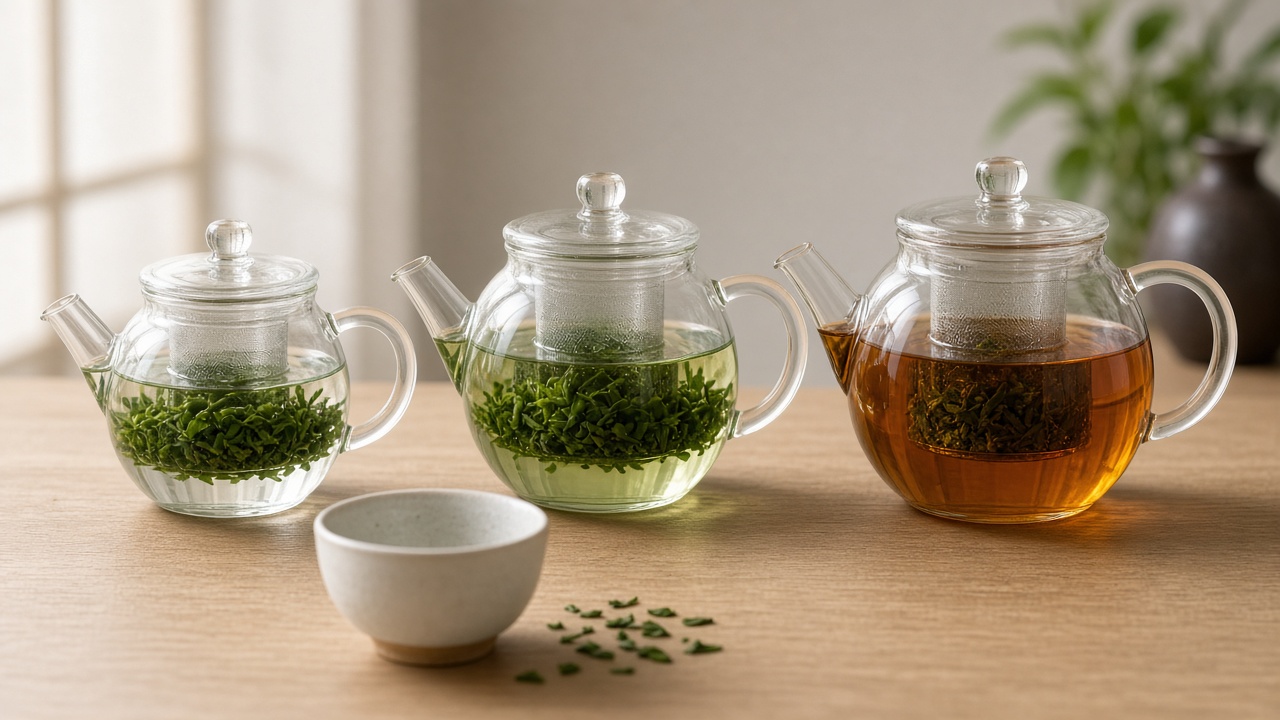
In Japan, a kyusu is the everyday teapot for loose-leaf green tea. Hario’s ChaCha Kyusu Maru (“round”) is a clear glass version with a strainer basket. It comes in three sizes with nearly identical names, so the most common question is simply which one to buy.
Quick Comparison Table
| Spec | Maru 300 | Maru 450 | Maru 700 |
|---|---|---|---|
| Model number | CHJMN-30T | CHJMN-45T | CHJMN-70T |
| Practical capacity | 300 mL (10.1 oz) | 450 mL (15.2 oz) | 700 mL (23.7 oz) |
| Brim-full capacity (Hario Japan store) | 320 mL (10.8 oz) | 520 mL (17.6 oz) | 750 mL (25.4 oz) |
| Size (W x D x H) | 143 x 98 x 98 mm | 155 x 118 x 95 mm | 173 x 132 x 108 mm |
| Mouth diameter | 94 mm | 94 mm | 107 mm |
| Hario’s green tea recipe (350 mL) | Too small | Fits | Fits, with room for a 2x batch |
| Pot and lid | Heatproof borosilicate glass, made in Japan | Same | Same |
| Strainer | Stainless steel, made in China | Same | Same |
| Hario USA price | $21.50 | $23.50 | $25.50 |
| Hario Japan price | ¥2,750 | ¥2,750 | ¥3,300 |
Practical capacity, sizes, materials and origins are from Hario USA and Hario Japan product pages. Brim-full capacities are from Hario’s official Japanese web store (HARIO NETSHOP). US prices are Hario USA’s own store prices, not Amazon prices. Japanese prices include tax. Hario publishes only boxed weights, and its Japanese pages don’t agree with each other, so we don’t list weights. Checked October 2026.
Key differences at a glance
- Capacity: 300, 450 or 700 mL of practical capacity (10.1, 15.2 or 23.7 oz).
- Price: Only $4 separates the smallest and largest at Hario USA ($21.50 / $23.50 / $25.50).
- Footprint: The 450 is wider than the 300 (155 vs 143 mm) but slightly lower (95 vs 98 mm). The 700 is the largest in every direction, with a wider 107 mm mouth.
- What stays the same: Heatproof borosilicate glass pot and lid made in Japan, stainless steel strainer, and the same care rules: hot water, microwave (strainer out) and dishwasher are fine, while stovetops and ovens are not.
How Many Cups Each Size Makes
Hario rates the Maru by practical capacity, the amount you actually brew with the strainer and lid in place. Its Japanese store also lists brim-full capacity, which is only 20-50 mL more. Plan around the practical number.
- 300 mL (CHJMN-30T): One cup of about 10 oz. Good for a single drinker at a desk.
- 450 mL (CHJMN-45T): One 12-15 oz mug. Hario’s green tea and black tea recipes both use 350 mL of water, which fits this size with room to spare.
- 700 mL (CHJMN-70T): About two 12 oz mugs. This size makes sense for a couple, for guests, or for brewing once and keeping a pot of iced tea in the fridge.
The 300 mL can’t hold Hario’s 350 mL recipe, so you would scale it down. With the 700 mL, you can make a smaller batch, but keep in mind that the leaves need enough water to stay submerged in the strainer.
Hario’s Official Brewing Recipe
Hario Japan publishes a short recipe booklet for the ChaCha Kyusu Maru (in Japanese). Here it is in US terms:
| Tea | Leaves | Water | Steep |
|---|---|---|---|
| Japanese green tea | 7-8 g (2-3 heaping tsp) | 350 mL of boiled water, first poured into the cups to cool it to about 90°C (194°F) | About 1 minute |
| Black tea | 5-6 g (2 heaping tsp) | 350 mL at 100°C (212°F) | 2-3 min for fine leaves, 3-4 min for large leaves, then stir once |
For both, Hario suggests pouring a little into each cup in turn (mawashi-tsugi) so every cup ends up the same strength. Hario also suggests brewing with extra leaves and pouring over a glass full of ice for quick iced tea in summer.
What All Three Sizes Share
Glass and heat limits
The pot and lid are Hario’s heatproof borosilicate glass, made in Japan. Hario’s manual rates the glass for a temperature difference of 120°C (216°F). It is fine with boiling water and microwave reheating, but Hario says not to use it on an IH cooktop, over an open flame, or in an oven. The manual also says not to heat it empty, and not to use a pot that is cracked, chipped or deeply scratched.
The strainer
Each size comes with a large stainless steel mesh strainer. Hario USA says it gives the leaves room to expand. The pot and lid are made in Japan, and the strainer is made in China. Hario’s manual says to take the strainer out before microwaving, and not to leave it soaking in household bleach for long, because that can weaken the metal.
Pouring and cleaning
Hario’s Japanese manual highlights four points: the handle works for both right- and left-handed users, the strainer comes out, the wide mouth is easy to wash, and the lid is designed not to slip. It still says to keep a hand on the lid when you pour. The three small dents in the lid are air vents. For cleaning, use a soft sponge and mild detergent, not cleanser or abrasive pads. For heavy tea stains on the glass, Hario says you can use diluted household bleach and rinse well. Hario USA lists the Maru as dishwasher safe.
Maru vs Natsume: Which Hario Glass Teapot?
If you’re looking at the Maru, you’ll probably also see the Hario ChaCha Natsume. It is a taller Hario glass teapot at a similar price, and the key difference is the strainer.
| Spec | ChaCha Kyusu Maru | ChaCha Natsume |
|---|---|---|
| Model numbers | CHJMN-30T / 45T / 70T | CHRN-2N / CHRN-4N |
| Practical capacities | 300 / 450 / 700 mL | 360 / 700 mL |
| Shape | Low, round pot (95-108 mm tall) | Taller pot (116 / 143 mm tall) |
| Strainer | Stainless steel mesh basket | Polypropylene frame with polyester mesh (rated to 120°C / 248°F, per Hario’s manual) |
| Microwave (reheating tea) | Remove the strainer first | Remove the lid and strainer first |
| Hario USA price | $21.50 / $23.50 / $25.50 | $24.50 / $26.50 |
| Hario Japan price | ¥2,750 / ¥2,750 / ¥3,300 | ¥2,750 / ¥3,300 |
Sources: Hario USA, Hario Japan and Hario Global product pages and the Natsume instruction manual. Hario USA’s size menu labels the smaller Natsume “450 ml,” but its product description and Hario Japan both list CHRN-2N at 360 mL.
Hario says the Natsume’s strainer does not clog when you pour, and its manual says it handles finely cut tea leaves. That makes the Natsume worth a look if you mostly brew fukamushi (deep-steamed) sencha or other fine teas. The Maru is lower, costs $1 less at the 700 mL size, and has a metal strainer instead of a plastic one. For the Natsume, Hario says to remove both the lid and the strainer before microwaving.
Who Should Buy Which?
Choose the Maru 300 mL (CHJMN-30T) if you:
- Drink one small cup at a time and want the smallest pot on your desk
- Don’t mind scaling Hario’s 350 mL recipe down
Choose the Maru 450 mL (CHJMN-45T) if you:
- Drink one mug, or share with one other person
- Want to follow Hario’s recipe as written
- Aren’t sure which size to get (it costs only $2 more than the 300)
Choose the Maru 700 mL (CHJMN-70T) if you:
- Pour for two or more people or for guests
- Want to brew once and chill a pot of tea for later
Prefer cold-brewing tea in the fridge instead? See Hario Mizudashi Tea Pot vs Filter-in Bottle. Need a kettle for hot water? See Hario V60 Drip Kettle AIR vs Zebrang 350 mL. To keep a brewed cup hot at your desk, see Thermos Icon 12 oz Tumbler vs 14 oz Mug.
The View from Japan
Hario Japan sells this teapot as the 茶茶急須 丸 (chacha kyusu maru). It describes it as a teapot designed for ease of use. The clear glass lets you watch the color of the tea, the large strainer lets the leaves open up, and the round knob on the lid is easy to grip. Hario’s official Japanese store adds a few more selling points: a wide mouth that is easy to wash, a compact pot that still holds a lot, Japanese-made glass, and a design that works for Japanese, Chinese, black and herbal tea. Hario notes that the glass, HARIO Glass, is made from natural materials at its own factory in Japan.
In Japan, the 300 mL and 450 mL both list at ¥2,750 and the 700 mL at ¥3,300 (tax included). The official store lists the 300 and 450 as sharing the same replacement lid and strainer, and the 700 mL as having its own strainer. Hario Japan currently lists six kyusu-style teapots, including the Maru, the square Kaku and the Natsume.
Japanese reviewers, on Hario’s official store and on lifestyle blogs, most often praise being able to see the tea’s color, which helps them pour it before it gets too strong or too weak. They also like the wide mouth and short spout, which make the pot easy to wash, and many say it pours cleanly without dripping. Two grape UPDATE review articles noted that very few leaves got past the fine strainer, and that the handle stayed cool while pouring. The complaints are mostly about glass. Two store reviewers broke a pot or found a crack in the spout, though one blogger reported three years of use without a break. One 300 mL reviewer said the lid rattled when pouring and needed holding. A 700 mL owner wished the mesh clogged less. A blogger who uses the 700 mL daily said tea stains collect at the spout but come off with kitchen bleach. The same blogger said the open spout lets the tea cool faster, so they cover the pot with a cloth in winter, and that they support the bottom of a full 700 mL pot. We found few Japanese reviews of the Natsume, and none yet on Hario’s own store. (Third-party reviews, not our own testing.)
Hario ChaCha Kyusu Maru: Frequently Asked Questions
Which Hario ChaCha Kyusu Maru size should I buy?
For most people, the 450 mL (CHJMN-45T). It is the smallest Maru that fits Hario’s own 350 mL brewing recipe, which is about one 12 oz mug. Pick the 300 mL (CHJMN-30T) only if you drink one small cup at a time, and the 700 mL (CHJMN-70T) if you regularly pour for two or more people or chill a batch for later.
How many cups does each size make?
Hario rates the Maru by practical capacity: 300 mL (10.1 oz), 450 mL (15.2 oz) and 700 mL (23.7 oz). In US terms, that is roughly one 10 oz cup, one 12-15 oz mug, or two 12 oz mugs. Hario Japan’s brewing recipe uses 350 mL of water, which fits the 450 and 700 but not the 300.
Can the Hario ChaCha Kyusu Maru go on the stove?
No. Hario says it is safe for hot water, the microwave (with the strainer removed) and the dishwasher, but not for an oven, an induction (IH) cooktop or an open flame. Heat your water in a kettle, then pour it in.
Is the Hario Maru teapot microwave and dishwasher safe?
Yes, with one condition for the microwave: take out the stainless steel strainer first. Hario’s manual also warns that water heated in a microwave can boil over suddenly, and that the glass is rated for a temperature difference of 120°C (216°F). Hario USA lists the Maru as dishwasher safe.
How much tea should I use in the Maru?
Hario Japan’s recipe for Japanese green tea is 7-8 g of leaves (2-3 heaping teaspoons), 350 mL of boiled water cooled to about 90°C (194°F), and about 1 minute of steeping. For black tea, it uses 5-6 g (2 heaping teaspoons) and 350 mL of boiling water, steeped 2-3 minutes for fine leaves or 3-4 minutes for large leaves.
What is the difference between the Hario Maru and the Natsume?
The strainer and the shape. The Maru is a low, round pot with a stainless steel strainer. The Natsume is taller and uses a plastic strainer with fine polyester mesh, which Hario says does not clog when you pour. The Natsume comes in 360 mL ($24.50 at Hario USA) and 700 mL ($26.50), versus $25.50 for the 700 mL Maru.
Is the Maru only for Japanese green tea?
No. Hario Japan says it works for Japanese green tea, Chinese tea, black tea and herbal tea, and its recipe booklet covers both green and black tea.
Check current listings
Prices change often, and the three sizes have very similar listings, so check the model number (CHJMN-30T, 45T or 70T) before buying. If you want the fine-mesh alternative, search for the Hario ChaCha Natsume (CHRN-2N).
Related comparisons
- Hario Mizudashi Tea Pot vs Filter-in Bottle: Which Cold Brew?
- Hario V60 Drip Kettle AIR vs Zebrang 350 mL: Any Difference?
- Thermos Icon 12 oz Tumbler vs 14 oz Mug: Which for Coffee?
Sources
- Hario USA, ChaCha Kyusu “Maru” Tea Pot (official): https://www.hario-usa.com/products/maru-chacha-kyusu-tea-pot
- Hario USA, ChaCha Natsume Tea Pot (official): https://www.hario-usa.com/products/leaf-tea-pot-stainless-steel-filter
- Hario Japan: 茶茶急須 丸 CHJMN-30T / 45T / 70T (hario.com): https://www.hario.com/product/tea/kyusu/CHJMN.html
- Hario Global: Cha Cha Kyusu Maru (official, English): https://global.hario.com/product/tea/kyusu/CHJMN.html
- Hario: 茶茶急須 丸 instruction manual (PDF): https://www.hario.com/product/CHJMN.pdf
- Hario: 茶茶急須 丸 recipe booklet (PDF): https://www.hario.com/product/recipe/chjmn_recipe_0703.pdf
- HARIO NETSHOP (official Japanese store): 茶茶急須 丸 300 mL: https://shop.hariocorp.co.jp/products/chjmn-30t
- HARIO NETSHOP: 茶茶急須 丸 450 mL: https://shop.hariocorp.co.jp/products/chjmn-45t
- HARIO NETSHOP: 茶茶急須 丸 700 mL: https://shop.hariocorp.co.jp/products/chjmn-70t
- Hario Japan: 茶茶・なつめ CHRN-2N / CHRN-4N (hario.com): https://www.hario.com/product/tea/kyusu/CHRN.html
- Hario Global: Cha Cha Tea Pot Natsume (official, English): https://global.hario.com/product/tea/kyusu/CHRN.html
- Hario: 茶茶・なつめ instruction manual (PDF): https://www.hario.com/product/CHRN.pdf
- HARIO NETSHOP: 茶茶・なつめ: https://shop.hariocorp.co.jp/products/chrn-2n
- Hario Japan: About HARIO heatproof glass: https://www.hario.com/about/heatproof.html
- grape UPDATE: 茶茶急須 丸 review (Japanese): https://update.grapee.jp/1655206
- grape UPDATE: 茶茶急須 丸 review 2 (Japanese): https://update.grapee.jp/1757534
- WP358: 茶茶急須 丸 450 mL, 3 years of use (Japanese): https://wp358.wpx.jp/hario-kyusu/
- 節約もするけど、贅沢もする!: 茶茶急須 丸 700 mL (Japanese): https://setsuyaku-zeitaku.com/entry/2021/12/18/185856
Specs checked October 2026. Prices and availability change, so check the current listing before buying.
Leave a Reply